
Home > Products > Truck Electric Refrigeration Units > Belt Drive Refrigeration Unit
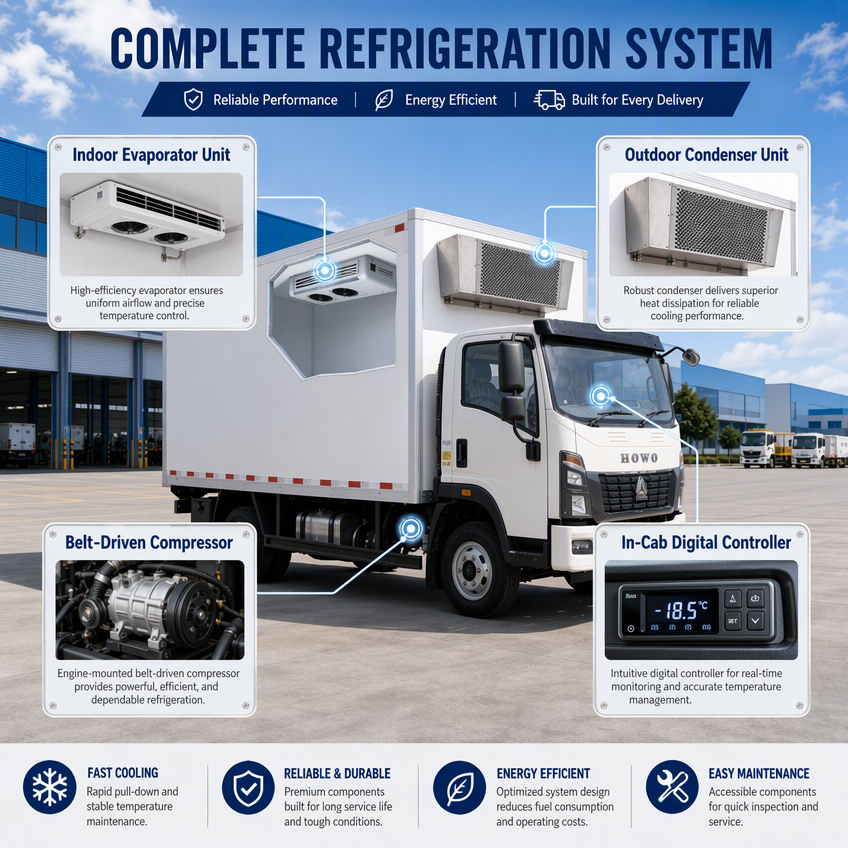
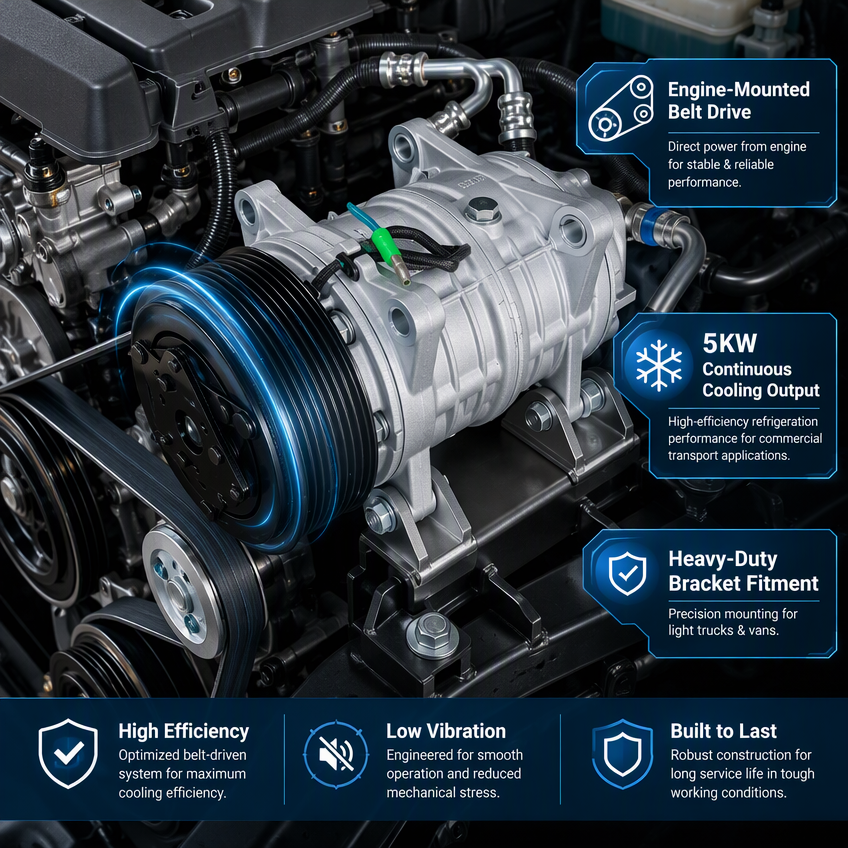
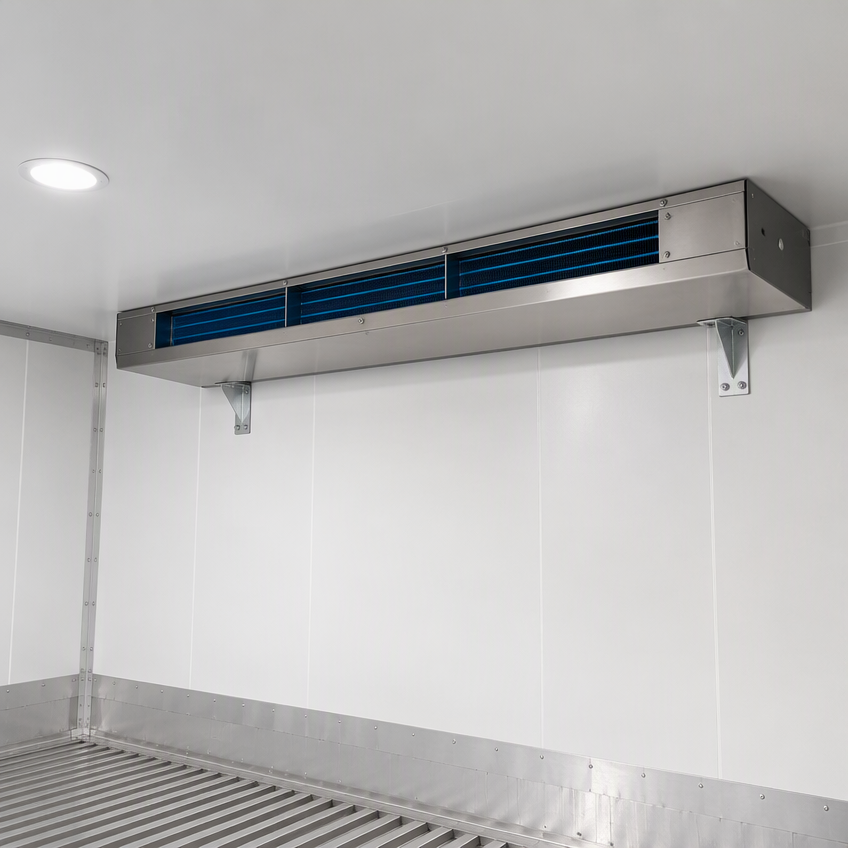
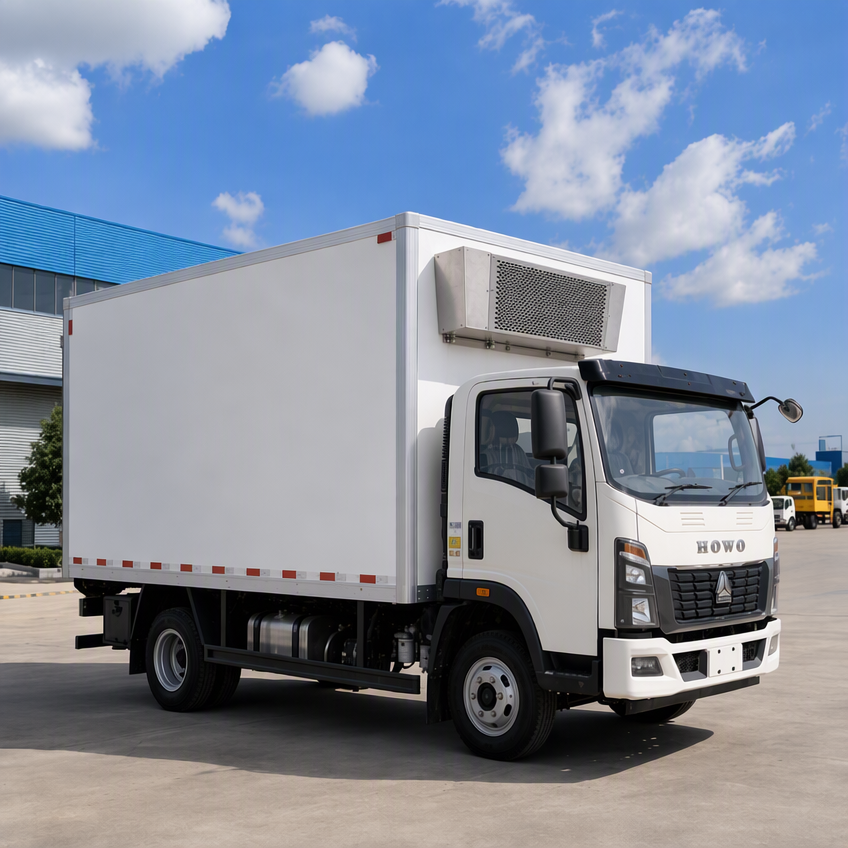
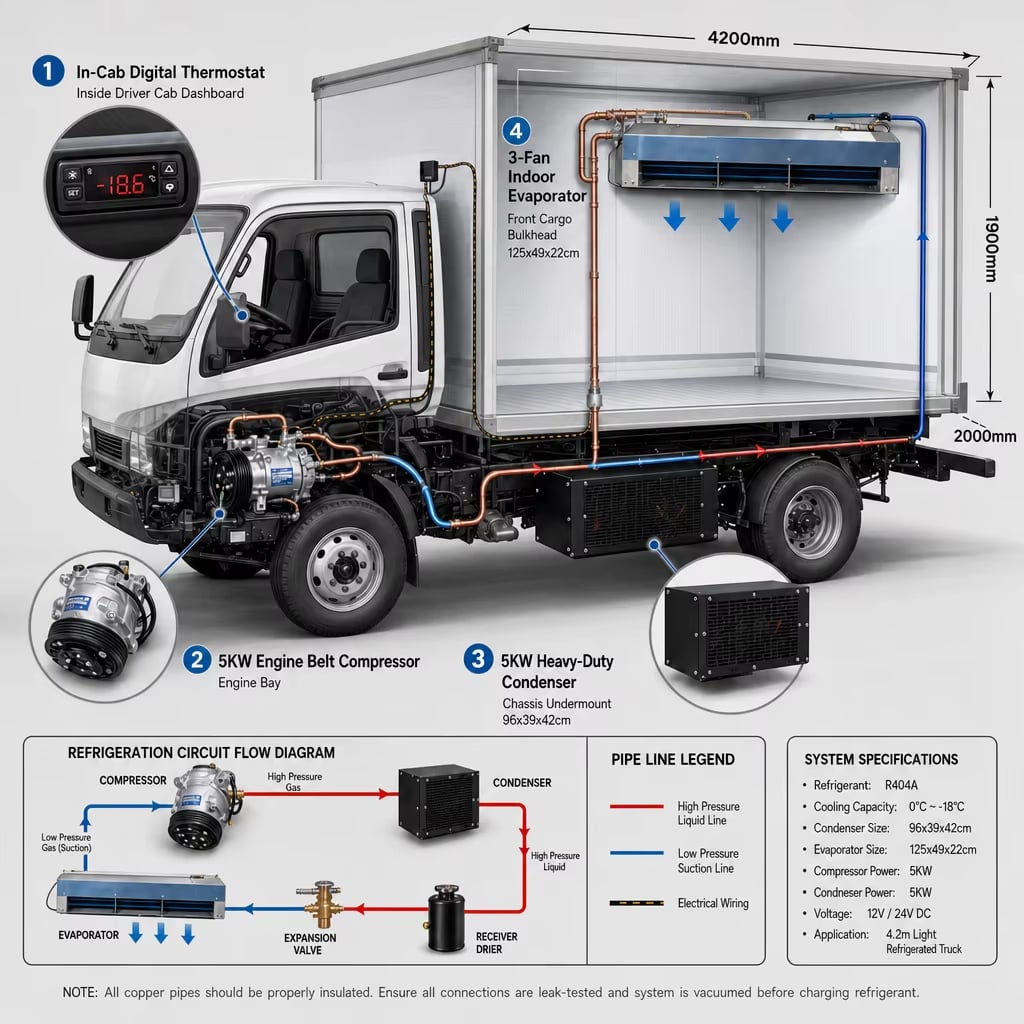
Run a 4.2 m refrigerated box truck on a single engine. The DEFU gooseneck belt-driven refrigeration unit mounts its condenser on the front wall above the cab and a slim three-fan evaporator on the cargo-box ceiling, so the Carrier 160 compressor can be driven straight from the crankshaft through a serpentine belt. There is no auxiliary diesel engine, no second fuel tank and no separate service schedule. The system delivers 5.0 kW of cooling and 2.0 kW of heating, holding fresh and frozen set points from +4 °C down to −18 °C across a 15–28 m³ cargo box.

| Product Name | Gooseneck Belt-Driven Truck Refrigeration Unit |
| Place of Origin | China |
| Brand Name | DEFU |
| Certification | CE/EMC/MSDS |
| Minimum Order Quantity | 1 PCS/SETS |
| Price | Negotiable |
| Delivery Time | 15-20 business days |
1. Engine-Driven, No Auxiliary Power Unit
The Carrier 160 compressor is driven directly from the truck engine through a multi-ribbed serpentine belt. No second engine to fuel, no extra alternator to mount, no additional emissions or service interval — one engine powers the truck and the cold chain.
2. Gooseneck Condenser Keeps the Cargo Box Clear
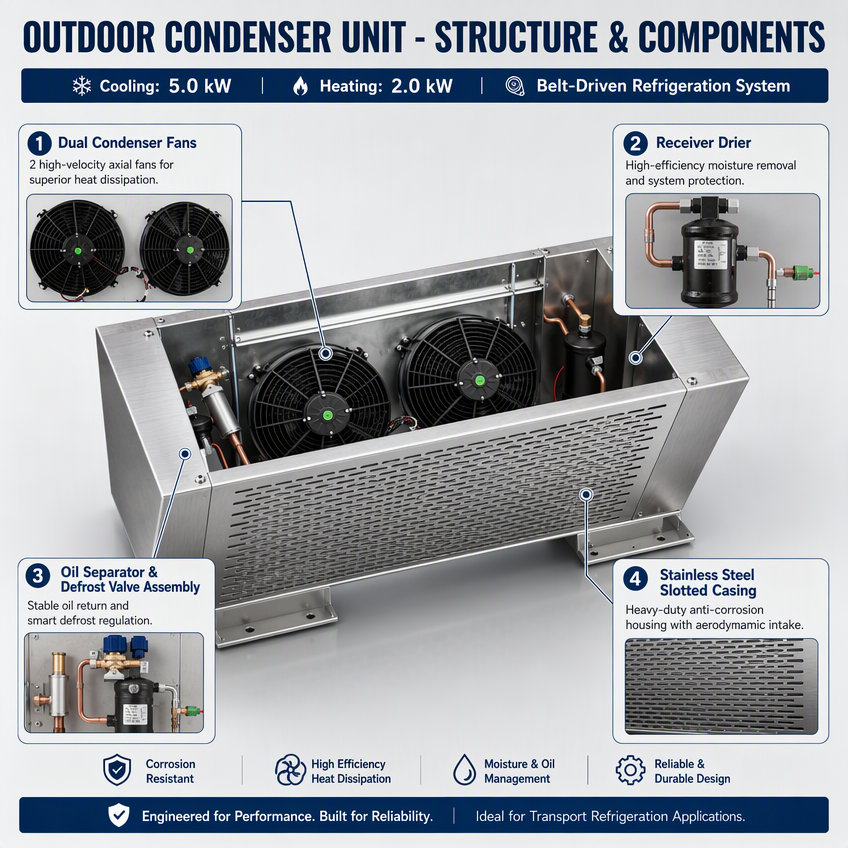
The condenser is mounted on the front wall above the cab instead of under the chassis or inside the box. The floor and ceiling stay free for payload, the unit is easy to reach for cleaning, and it receives clean, unobstructed airflow while the truck is moving.
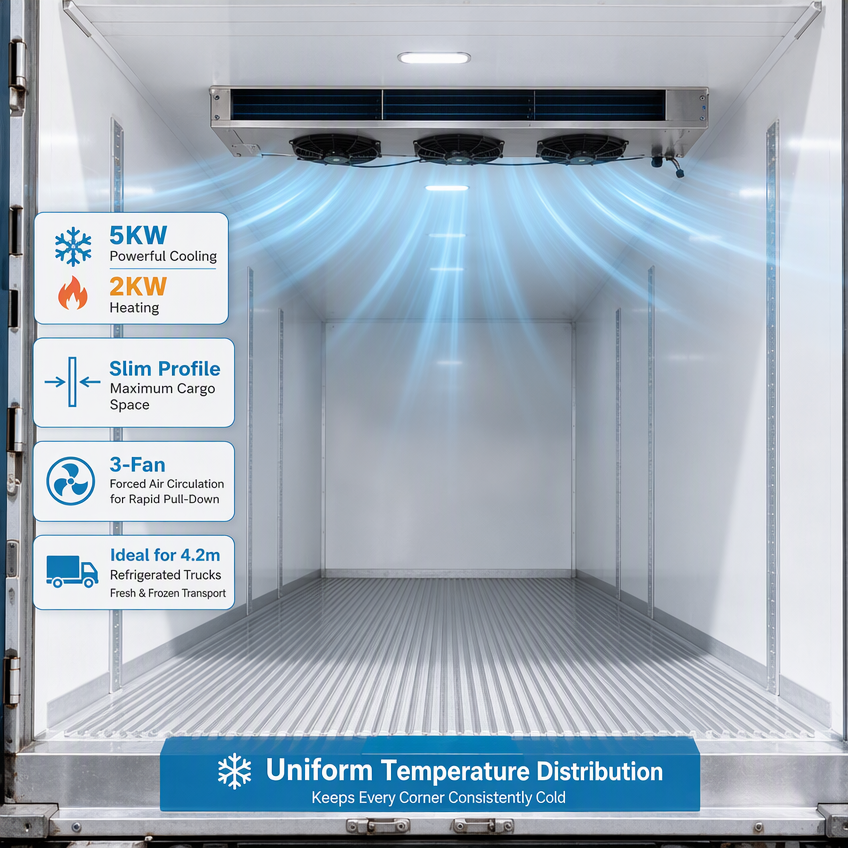
3. Slim 250 mm Evaporator with Three Fans
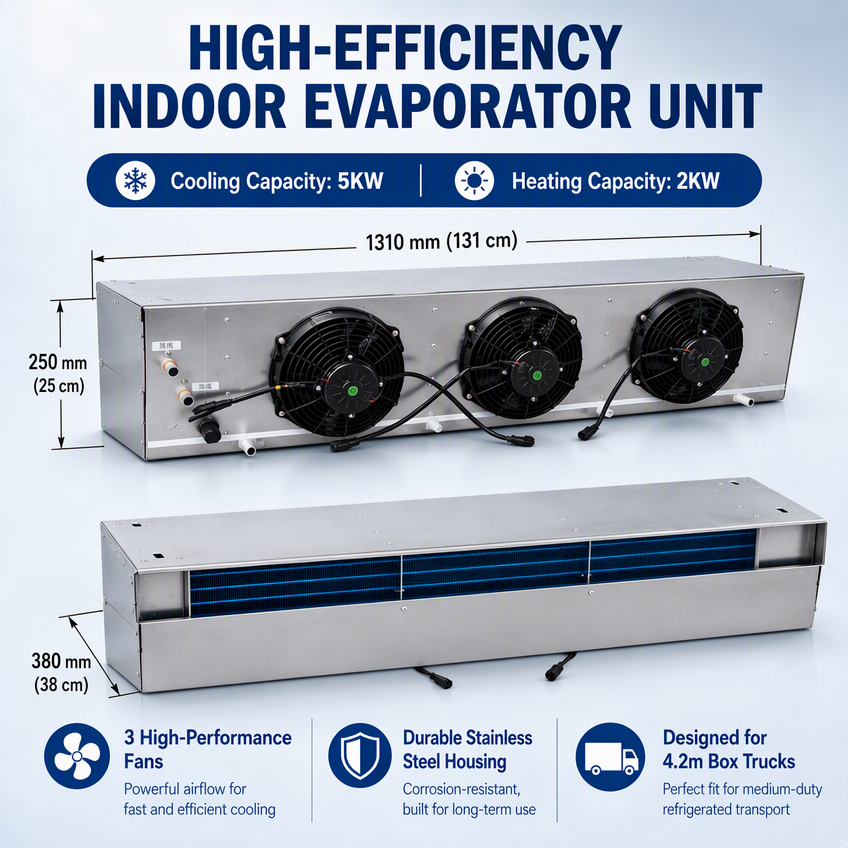
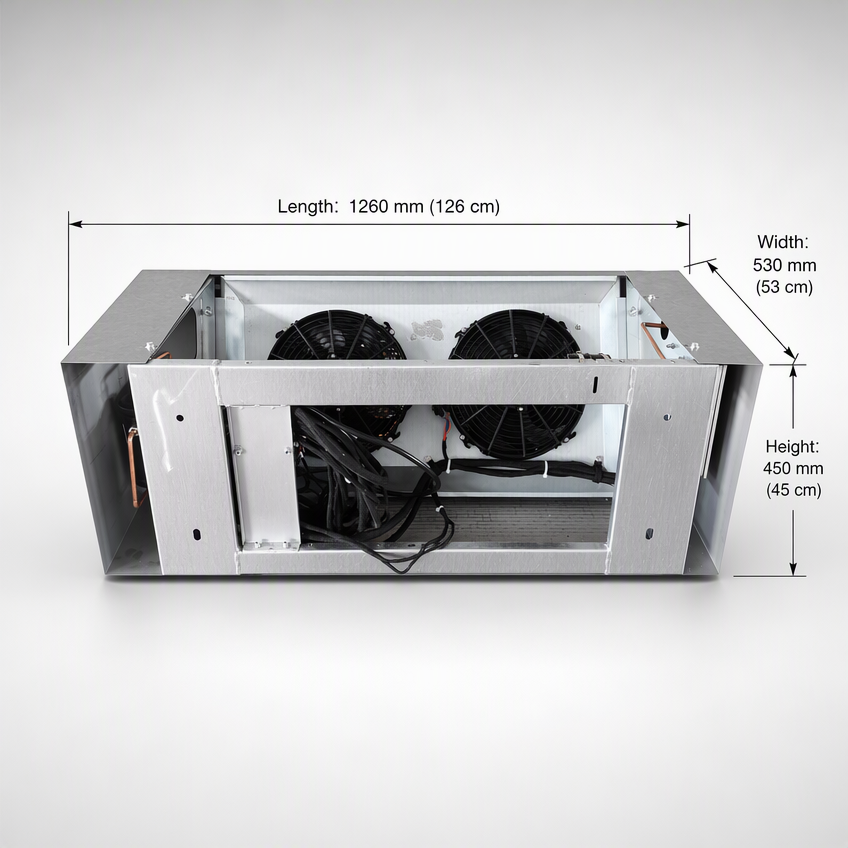
At 1,310 mm long, 250 mm high and 380 mm deep, the evaporator takes minimal headroom. Three high-performance fans push air across the coil and along the ceiling so cold air reaches the rear doors, not just the front of the load.
4. 5.0 kW Cooling Plus 2.0 kW Heating
Cooling capacity of 5.0 kW (≈17,060 BTU/h) with 2.0 kW (≈6,820 BTU/h) of heating covers chilled, fresh and frozen transport in one unit — including multi-drop routes and cold-season operation.
5. A Complete Drive Kit, Not Just a Compressor
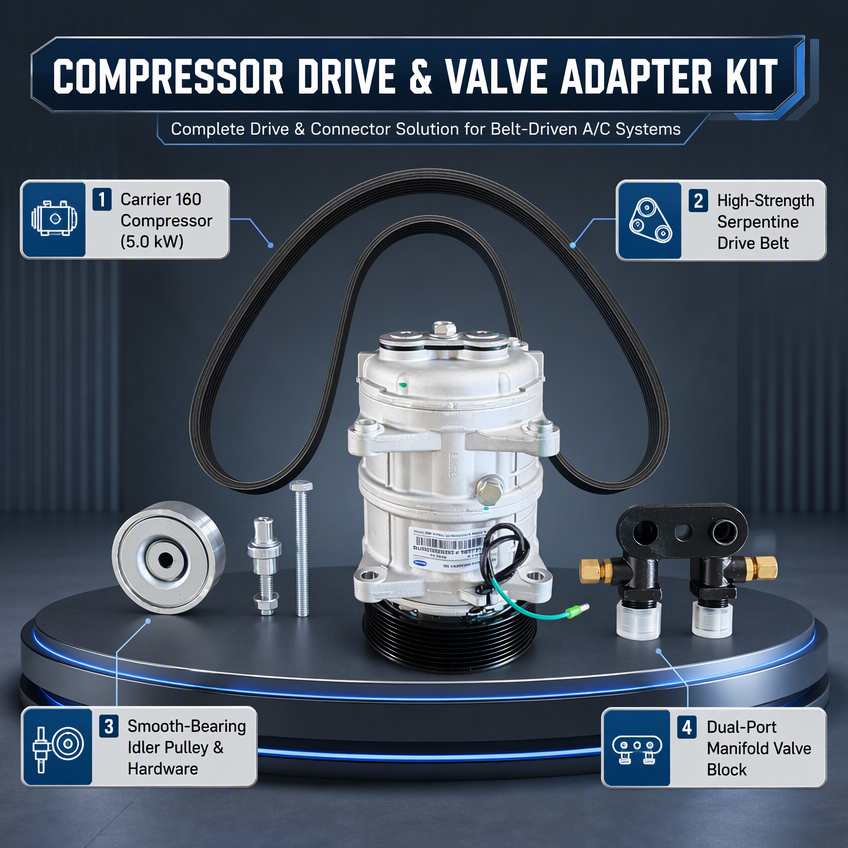
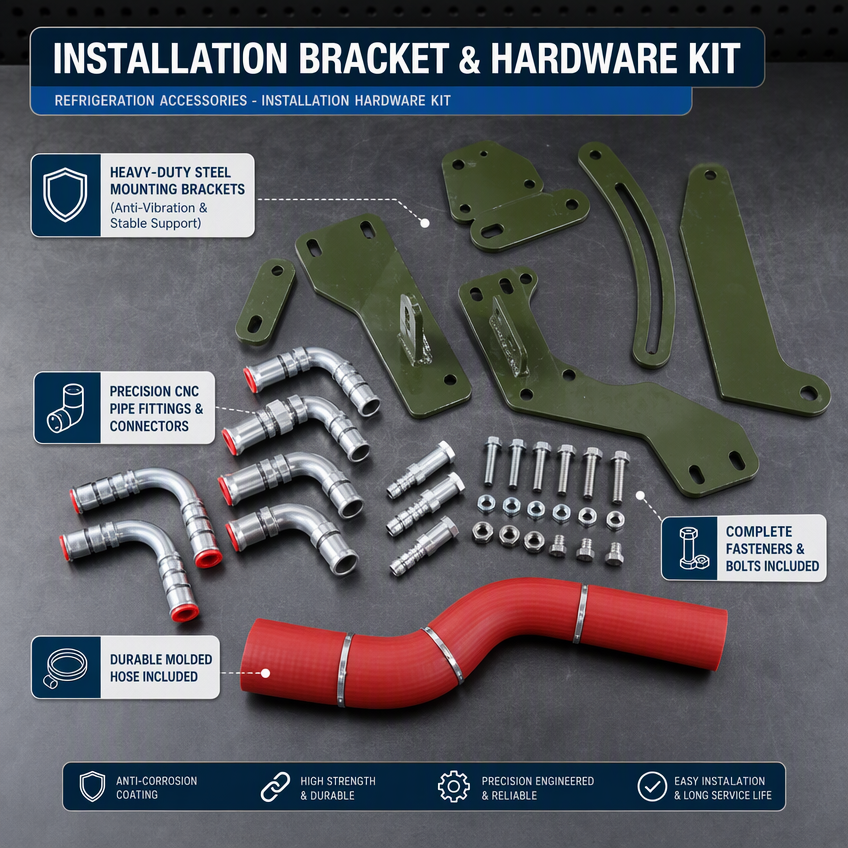
Every set includes the high-strength serpentine belt, smooth-bearing idler pulley with hardware, dual-port manifold valve block, heavy-duty mounting brackets and precision CNC hose fittings — the full drive and connection solution rather than parts to chase down locally.
6. Built to Be Serviced in the Field
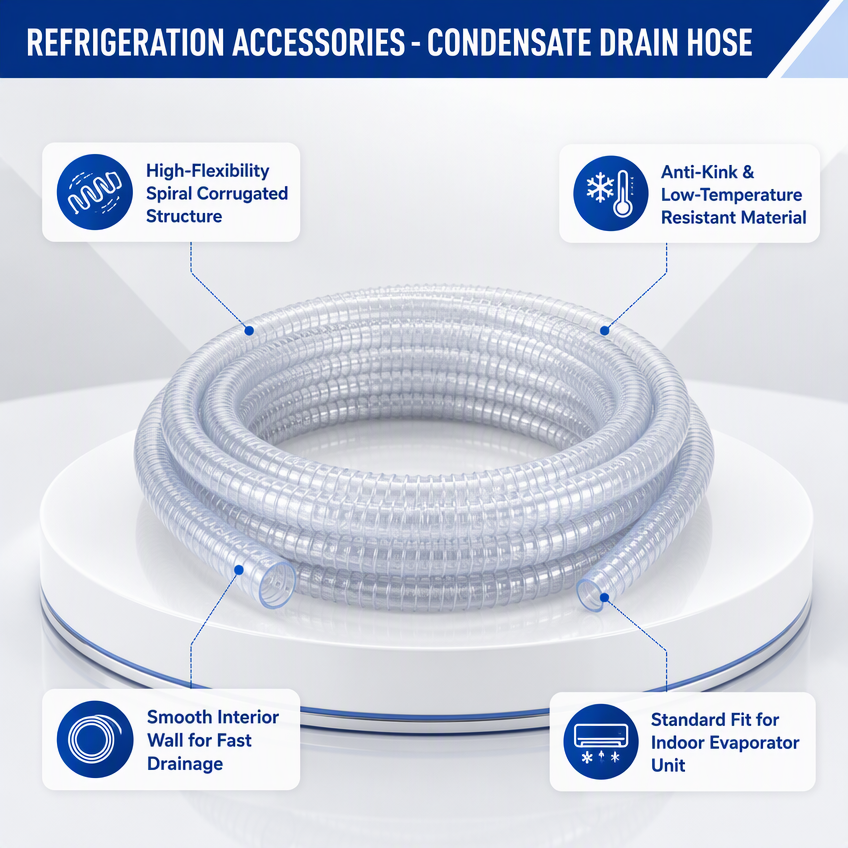
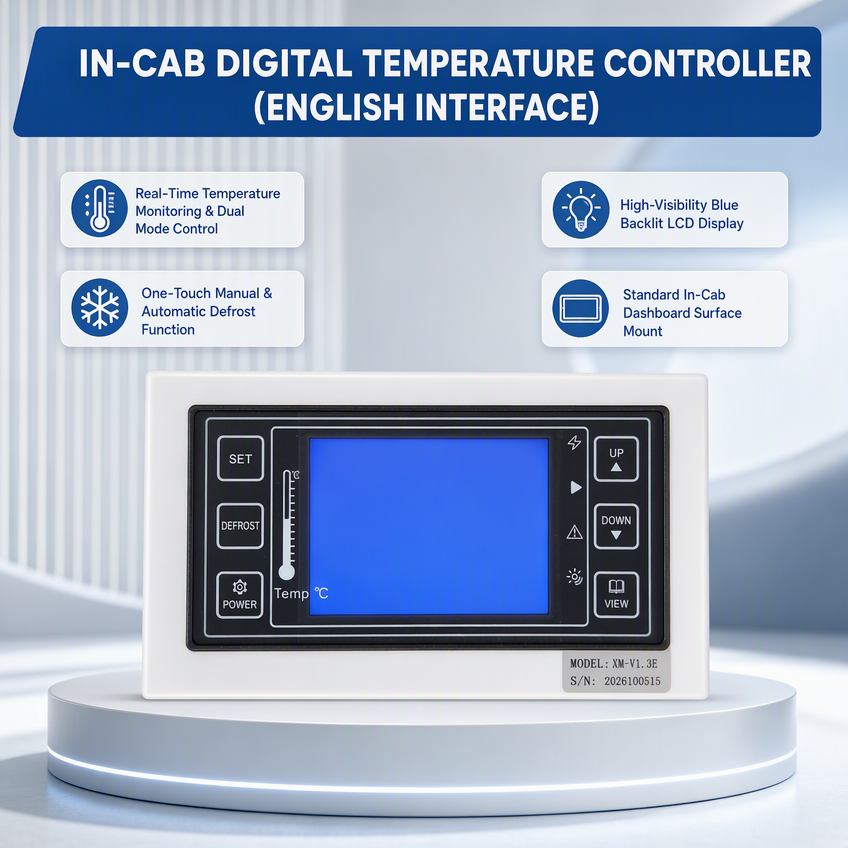
Stainless steel slotted casing on the condenser, an accessible receiver drier and oil separator, a kink-resistant spiral drain hose, and an in-cab digital controller for set-point changes without opening the cargo door.
Evaporator Unit
Condenser Unit
Compressor and Drive
Hoses, Fittings and Hardware
Drainage
The gooseneck layout is designed for a distributor or workshop installer rather than a dealership retrofit. The condenser bolts to the front wall above the cab on the supplied anti-vibration brackets; the evaporator hangs from the cargo-box ceiling; the compressor mounts to the engine on a vehicle-specific bracket and is aligned to the crankshaft pulley before belt tension is set. Because the refrigerant circuit stays short and fully accessible, the system is evacuated, charged and leak-tested the same way as a conventional truck air-conditioning circuit.
Installation sequence
Installation and commissioning manual, wiring diagram and hose routing drawing are supplied with every unit.
| Rated Voltage | 12V/24V |
| Size | STANDARD |
| Car Model | UNIVERSAL |
| Cooling capacity | 5KW |
| Indoor Air flow | 3350-3550r/h |
| Model | Split/knapsack |
| For cargo box volume | 18-25m³ |
| Compressor type | Belt driven GY compressor |
| Material | Stainless steel |
| OEM | Support |
1. Drive
The engine crankshaft pulley transfers power through a high-strength serpentine belt to the Carrier 160 compressor. A smooth-bearing idler pulley holds belt tension and alignment under load, keeping vibration low.
2. Compression
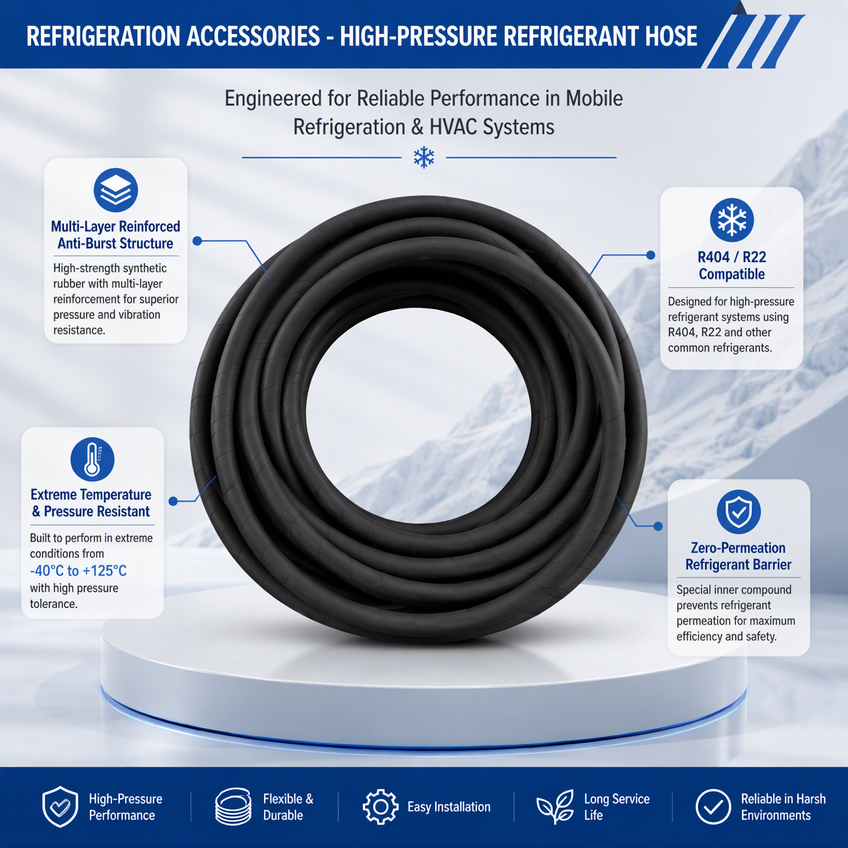
The compressor raises the pressure and temperature of the refrigerant and discharges it as hot high-pressure gas through the multi-layer reinforced hose to the gooseneck condenser.
3. Condensing
Two high-velocity axial fans draw ambient air through the slotted stainless steel casing and across the coil. The refrigerant condenses into a liquid and the heat leaves the system.
4. Drying and Metering
The receiver drier removes moisture and particles from the circuit, the oil separator returns lubricant to the compressor, and the defrost valve and expansion device meter liquid refrigerant into the evaporator at the correct rate.
5. Cooling and Air Distribution
Three fans pull air from the cargo box across the evaporator coil and discharge it along the ceiling. The cold air falls evenly through the load space, keeping front, middle and rear at the same temperature.
6. Control and Defrost
The in-cab digital controller shows set point and actual box temperature and runs the defrost cycle when frost builds on the coil. Heating output of 2.0 kW holds the set point in low ambient conditions and protects fresh loads.
Light-truck cold-chain distribution
4.2 m box trucks moving chilled and frozen goods between distribution centres, dark stores and retail outlets — the reference installation for this unit at 15–28 m³.
Meat, poultry and seafood
Frozen holding at −18 °C with fast pull-down after loading and stable recovery between delivery stops.
Dairy and fresh food
0 to +4 °C transport for milk, yoghurt, chilled ready meals and bakery products, where door openings are frequent and temperature stability matters most.
Fruit, vegetables and floriculture
Multi-drop routes with repeated door openings; high air volume and even distribution keep produce at set point from the first stop to the last.
Ice cream and frozen desserts
Deep-frozen distribution where any temperature excursion is visible in the product — the three-fan evaporator and 5.0 kW capacity hold the load through short stops.
Temperature-sensitive healthcare logistics
Chilled and frozen pharmaceutical transport in validated customer cold chains; the in-cab controller provides continuous set-point visibility.
Fleet conversion, rental and leasing
Converting dry box trucks into refrigerated units without adding an auxiliary engine: one fuel source, one service point, and OEM support for fleet branding and specification.

 EN