
Home > Products > Truck Electric Refrigeration Units > Belt Drive Refrigeration Unit
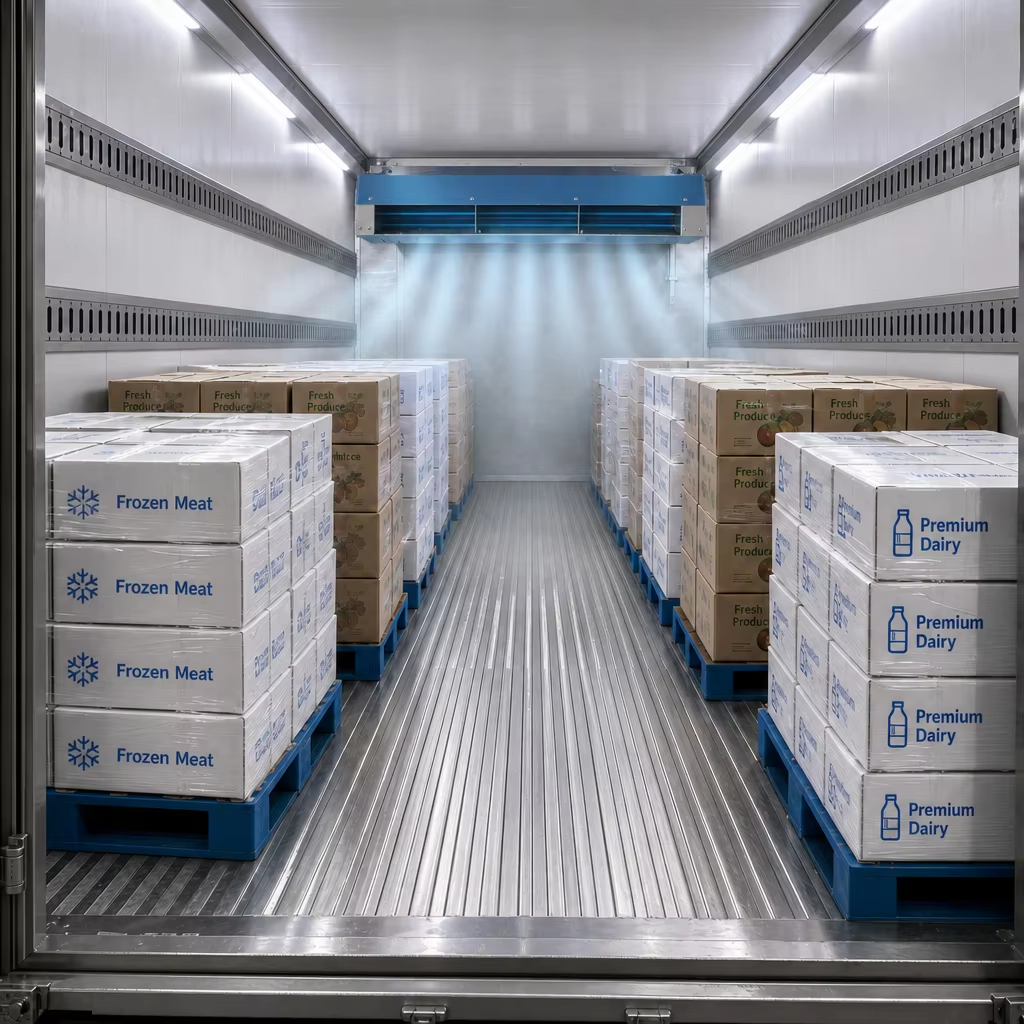
Cold chain transport in a light truck usually means one of three compromises: a rooftop unit that steals height, a self-powered reefer that adds an engine to maintain, or an electric unit that depends on the vehicle's charging system.
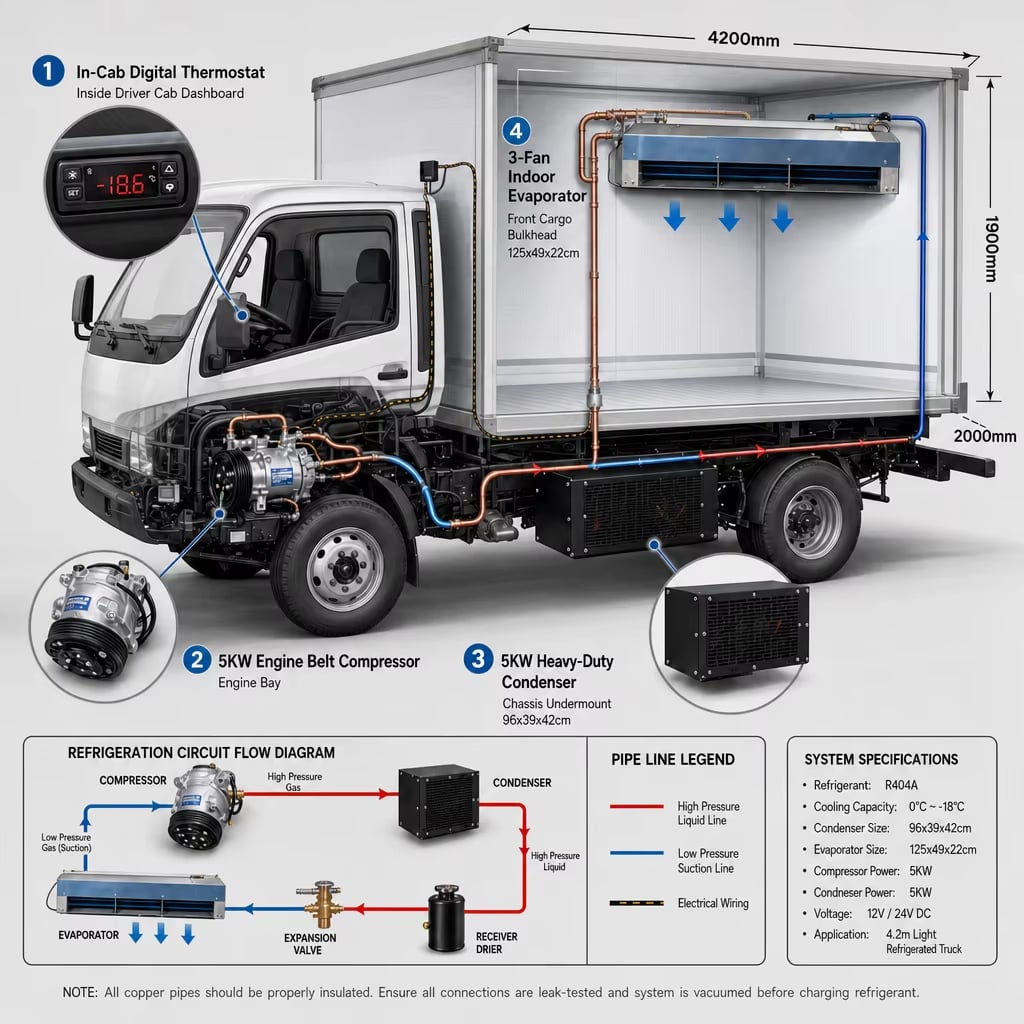
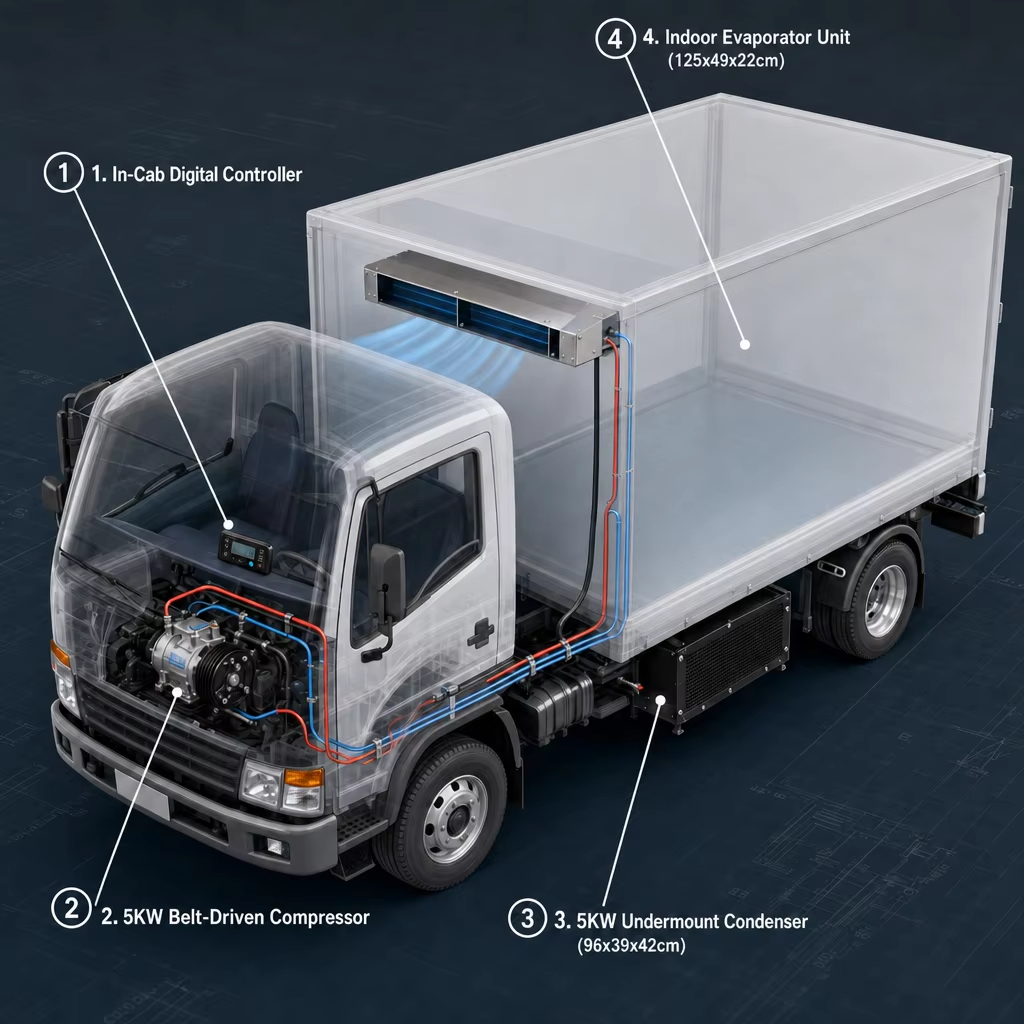
This system avoids all three. A belt-driven compressor sits in the engine bay and takes its power directly from the crankshaft pulley. The condenser is packaged into a compact chassis-mounted box. The evaporator hangs from the front bulkhead inside the cargo box, and a single controller on the dashboard ties the whole circuit together.
The result is a transport refrigeration system with the cooling performance of an engine-driven reefer, the installation footprint of an underslung unit, and the maintenance profile of a conventional truck air-conditioning circuit.

Product Name |
Van Refrigeration Unit |
Place of Origin |
China |
Brand Name |
DEFU |
Type |
Thermostat |
Certification |
CE/EMC/MSDS |
Minimum Order Quantity |
1 PCS/SETS |
Price |
Negotiable |
Delivery Time |
15-20 business days |
1. Engine-Driven, No Auxiliary Power Unit
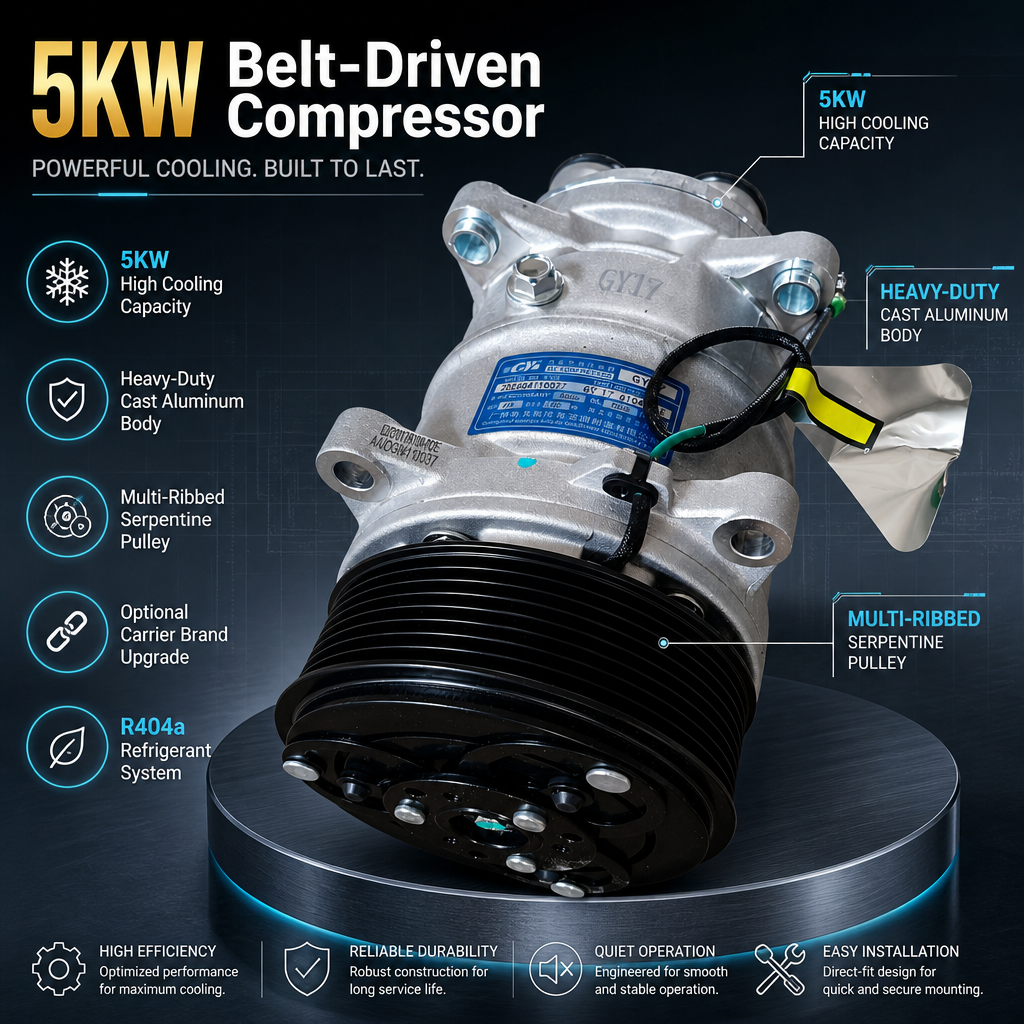
The compressor is belt-driven from the vehicle engine through a multi-ribbed serpentine pulley. There is no second engine to service, no separate fuel system, and no shore-power connection — one powertrain powers both the truck and the cold chain.
2. Underslung Condenser Saves Cargo Space
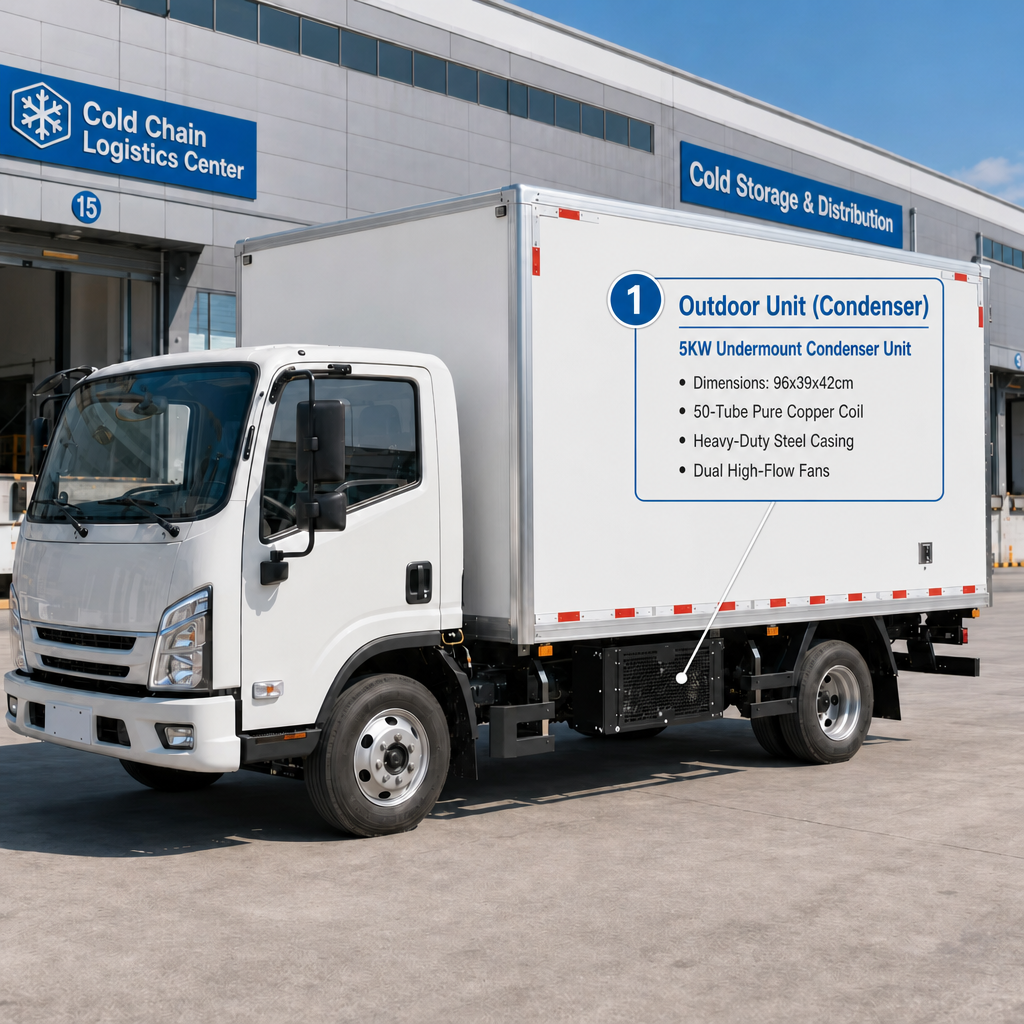
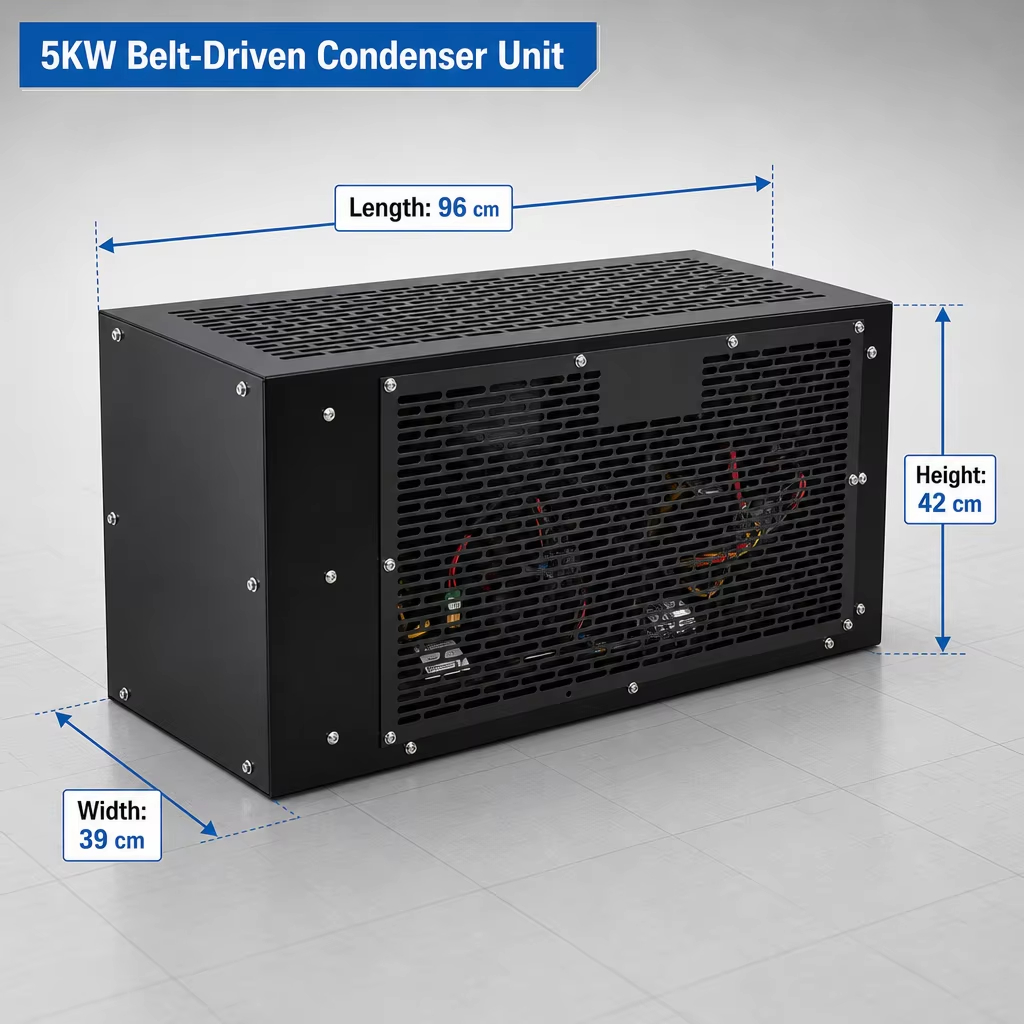
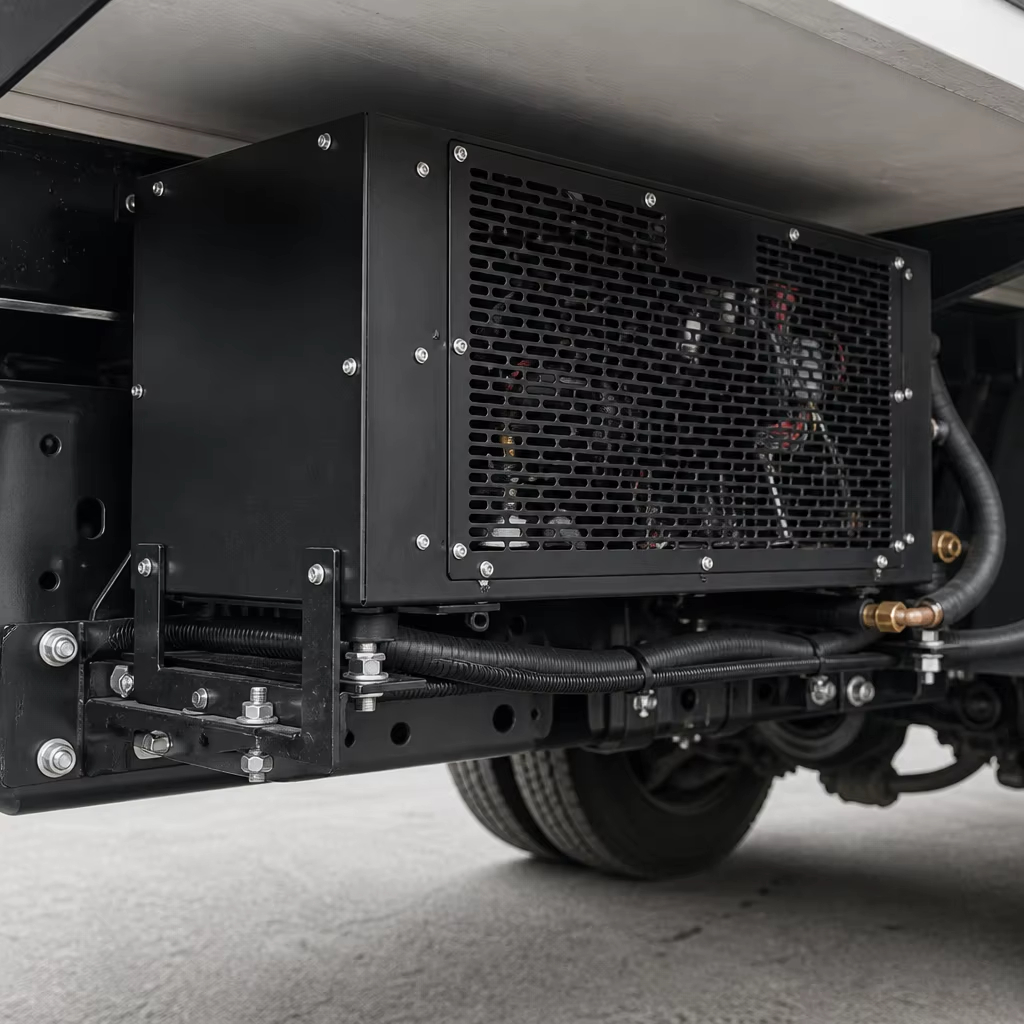
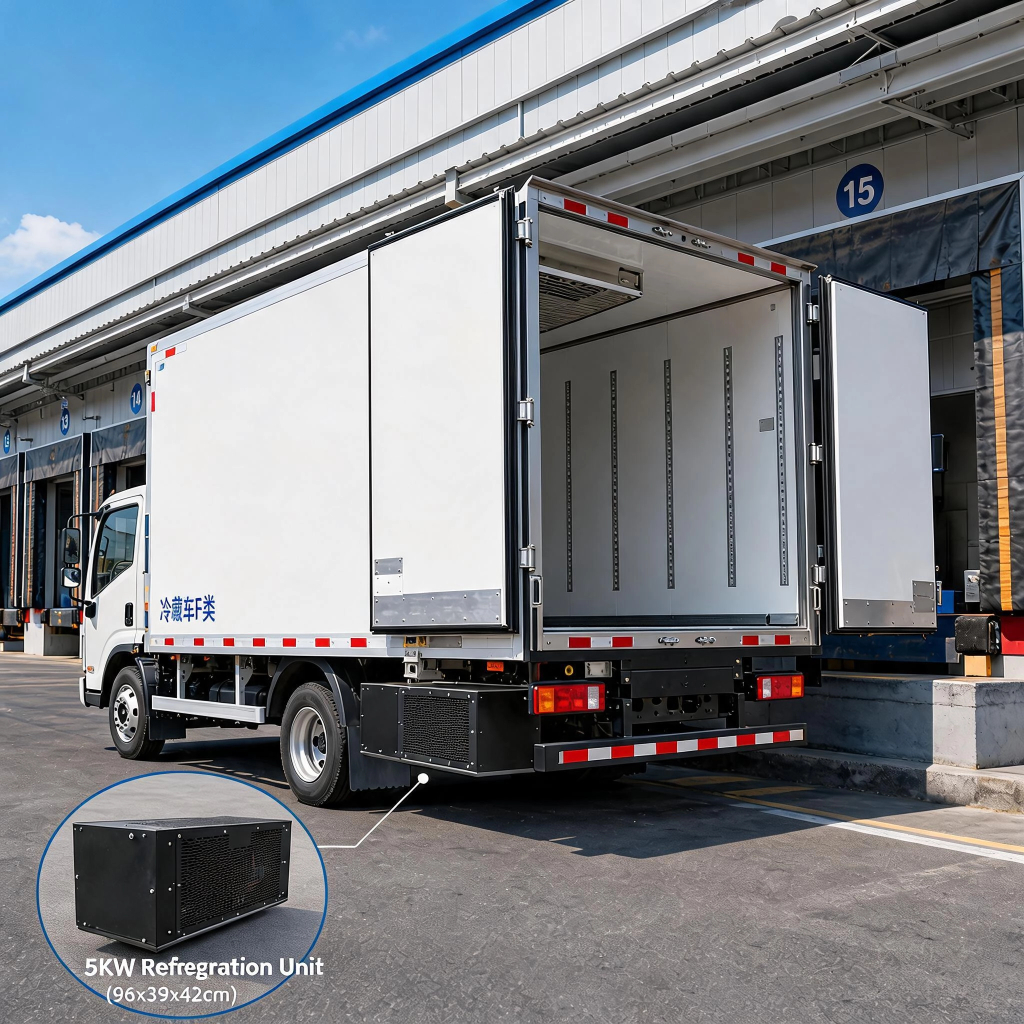
The condenser is a sealed 960 × 390 × 420 mm chassis-mounted unit, installed under the frame rails between the axles. Nothing intrudes into the cargo box and nothing sits above the roof line.
3. Four-Module Kit, One Supplier
Compressor, condenser, evaporator and in-cab controller are matched, pre-tested and shipped as a single system — with the refrigerant charge, hose routing and wiring diagram defined for the installation.
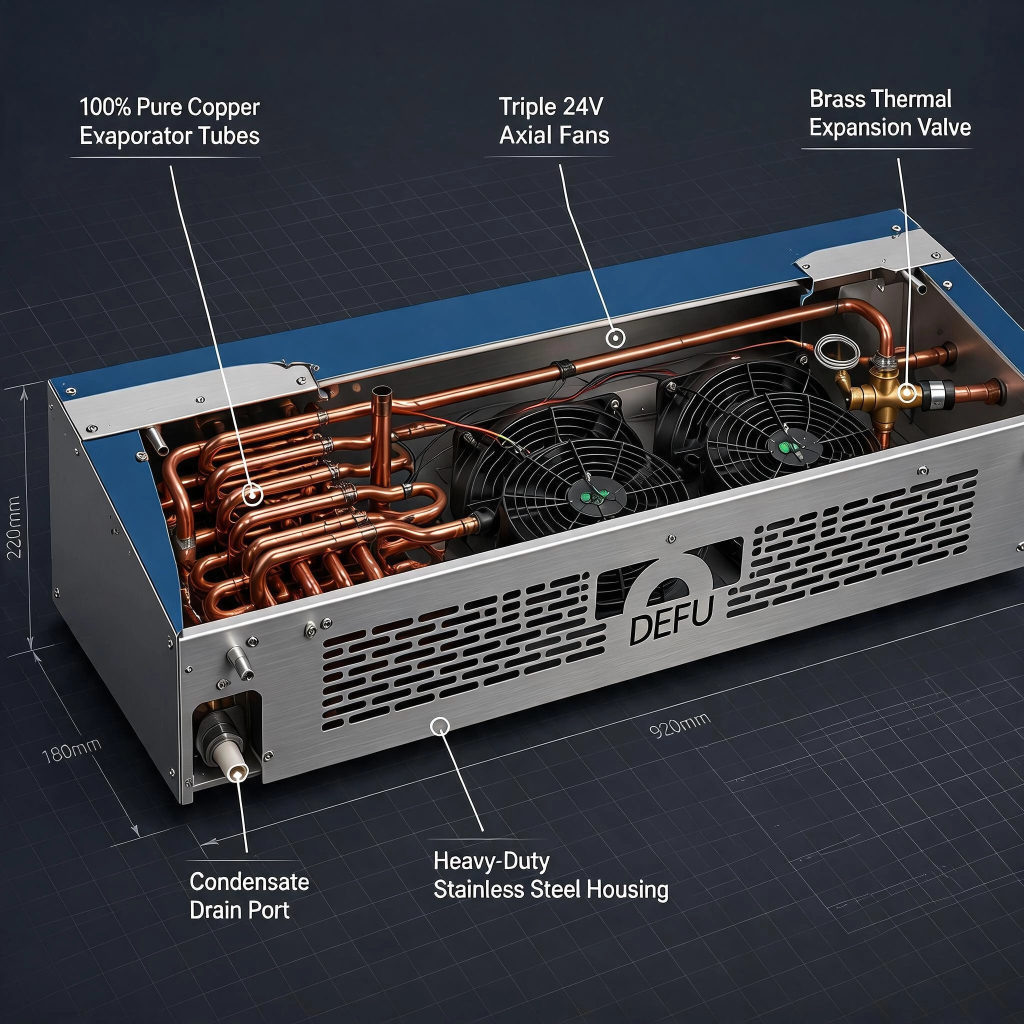
4. All-Copper Evaporator Core
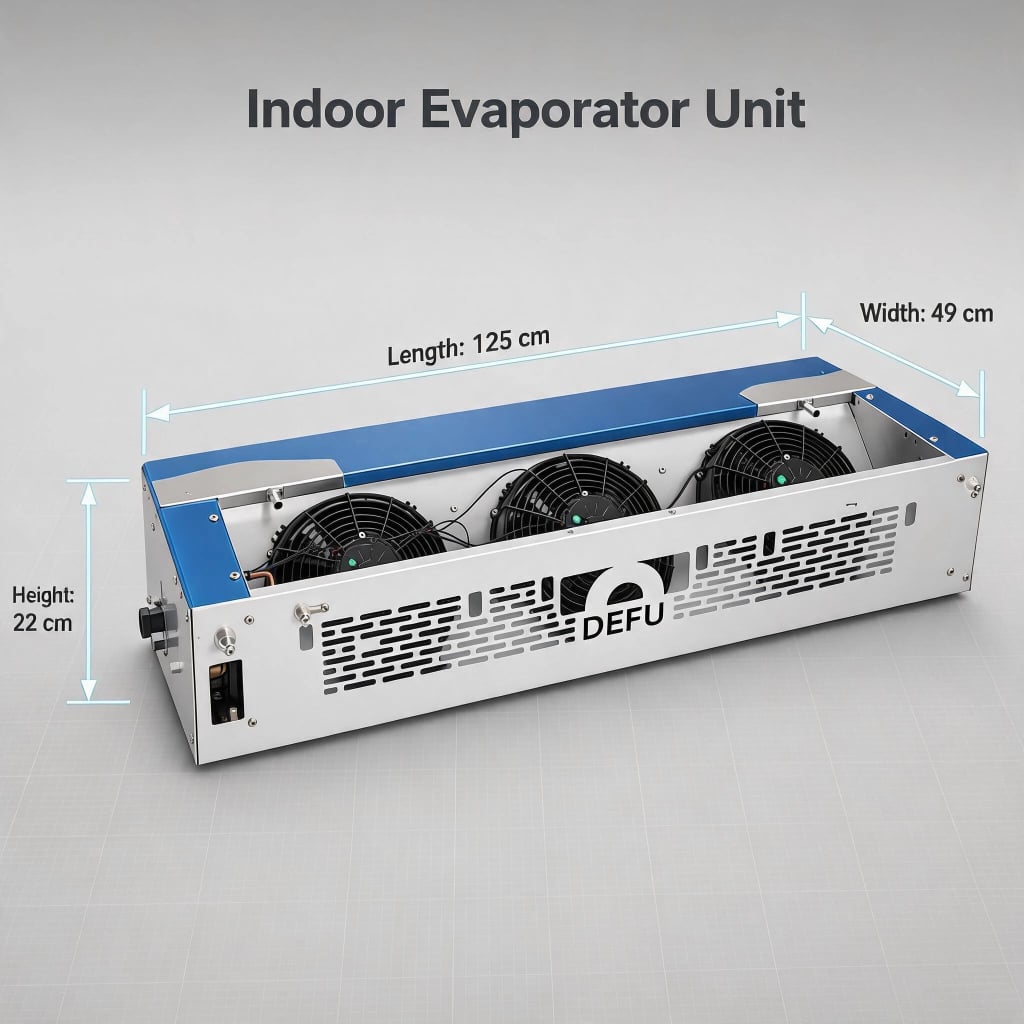
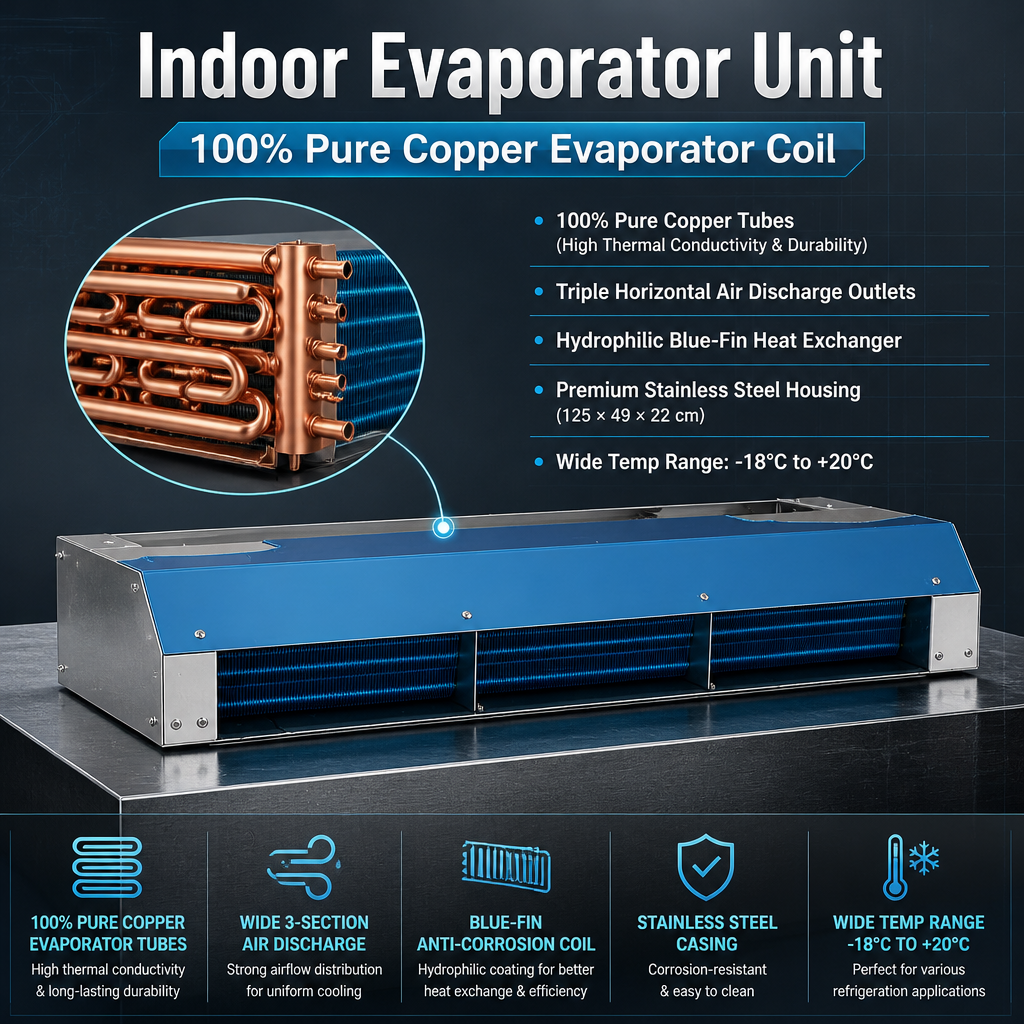
100% pure copper tubes with internal threading, a hydrophilic blue-fin heat exchanger and a stainless steel housing. Three horizontal discharge outlets distribute air evenly along the length of the body instead of dumping it in one spot.
5. Stable Cooling in High Ambient Conditions
Rated at 30 °C ambient with 2.65 kW (model 280) and 3.5 kW (model 380) at 0 °C evaporating, holding 1.59 kW / 1.96 kW down to −18 °C. The belt drive keeps compressor speed tied to engine speed, so capacity is maintained on long climbs and in dense traffic.
6. In-Cab Digital Control, Dual Screen
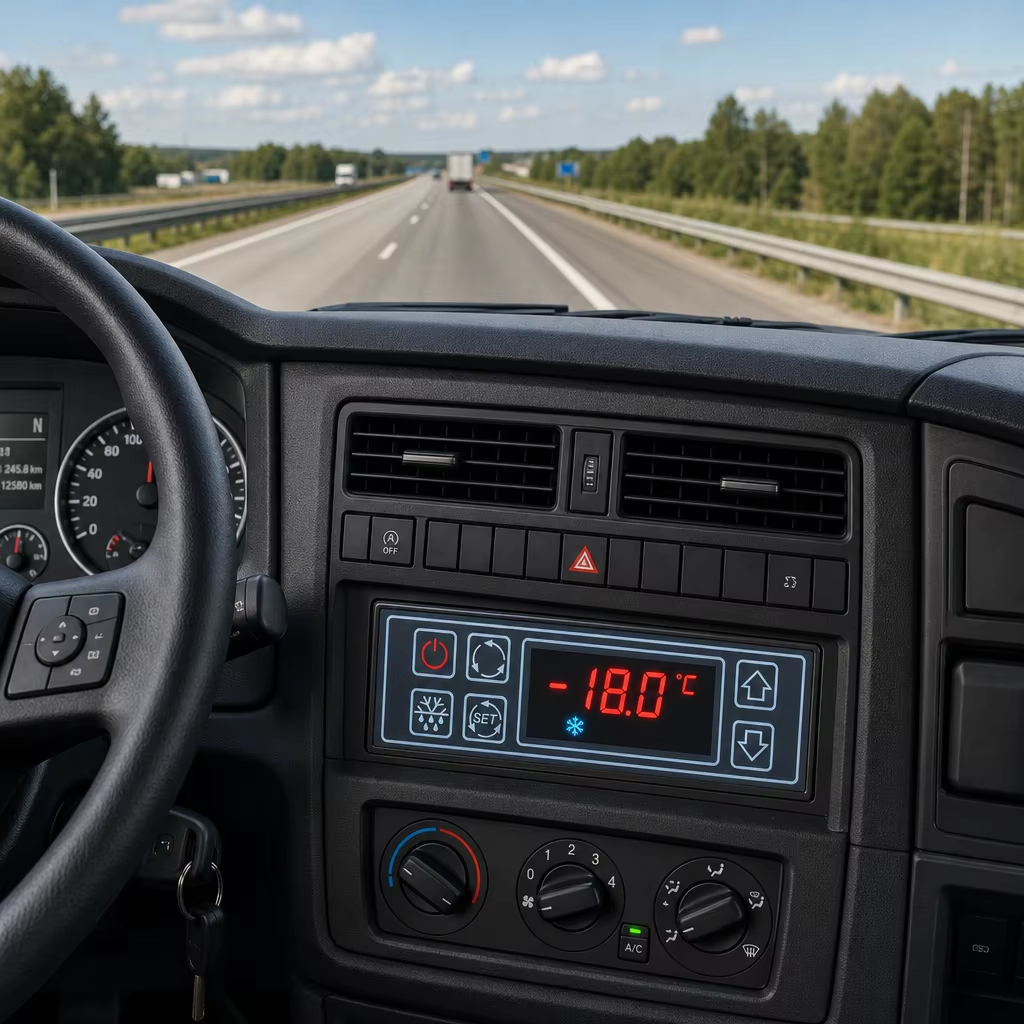
The dash-mounted controller shows set point and actual box temperature simultaneously, with defrost, set and up/down keys reachable from the driver's seat. 12 V / 24 V DC control platform.
The kit is designed for a bodybuilder or workshop install rather than a dealership retrofit:
Bolt the condenser bracket to the chassis rails between the axles, keeping the grille clear of the exhaust and the rear axle travel.
Mount the compressor on the engine accessory drive; align the pulley with the crankshaft and set belt tension to specification.
Hang the evaporator from the front bulkhead, leaving clearance for the door and the cargo load line.
Route insulated lines along the frame, fit the receiver-drier and expansion valve, evacuate and charge with R404A.
Connect the controller harness in the cab, set the target temperature and verify pull-down.
Installation and commissioning manual, wiring diagram and hose routing drawing are supplied with every unit.
| Rated Voltage | 12V/24V |
| Size | STANDARD |
| Car Model | UNIVERSAL |
| Cooling capacity | 5KW |
| Indoor Air flow | 3350-3550r/h |
| Model | Split/knapsack |
| For cargo box volume | 18-25m³ |
| Compressor type | Belt driven GY compressor |
| Material | Stainless steel |
| OEM | Support |
Light truck cold chain distribution
4.2 m box bodies moving chilled and frozen goods between distribution centres and retail outlets — the reference installation for this system.
Meat, dairy and frozen food delivery
Hold −18 °C across multi-drop routes where doors open frequently; the three-outlet evaporator re-cools the box quickly after each stop.
Pharmaceutical and temperature-sensitive logistics
Stable set-point control with in-cab readout and defrost cycles for 2–8 °C and frozen categories.
Fishery and agricultural transport
Continuous cooling from the point of catch or harvest, independent of mains power at either end of the route.
Engineering and service vehicles
Cooling for mobile workshops and specialised equipment cabins where a conventional reefer unit will not fit.
Fleet retrofit programmes
Standardised kits for distributors and bodybuilders converting existing light trucks to refrigerated configuration.

 EN