EN
EN


The Impact of Quiet Cooling (Under 50dB) on Driver Safety and Fatigue Management
The Impact of Quiet Cooling (Under 50dB) on Driver Safety and Fatigue Management
In the high-stakes world of long-haul logistics, driver fatigue is more than just a nuisance; it is a critical safety risk and a significant operational cost. While much attention is paid to hours of service (HOS) regulations, the quality of the rest period is often overlooked. One of the most significant disruptors of high-quality sleep in a truck cab is noise. This article explores how quiet cooling solutions—specifically those operating under 50dB—are transforming driver safety and fatigue management in modern fleets.
The Science of Sound and Sleep
According to the World Health Organization (WHO), continuous background noise above 45dB can significantly interfere with sleep, leading to frequent awakenings and reduced REM cycles. Standard engine-idling for climate control often produces noise levels between 65dB and 75dB, while older auxiliary power units (APUs) can hover around 60dB.
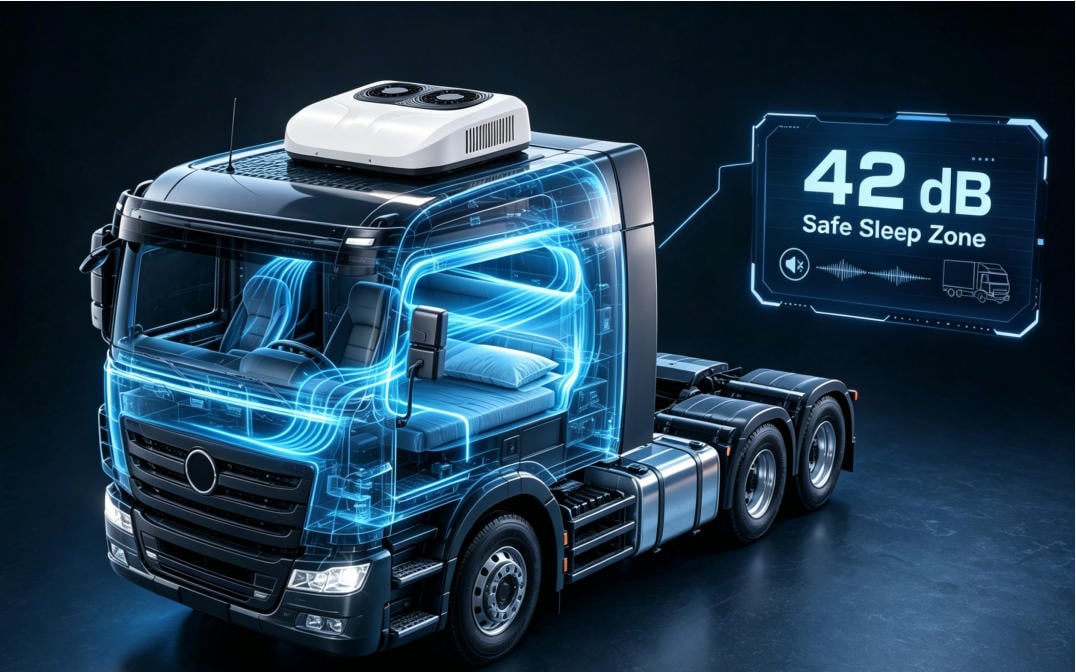
In contrast, advanced electric parking coolers like the DEFU series are engineered for silence. With noise levels ranging from 35dB in Sleep Mode to 50dB at full capacity, these units provide a library-quiet environment that allows the driver's brain to enter deep, restorative sleep.
Technical Performance: Efficiency Meets Silence
A quiet AC unit is only effective if it can maintain a comfortable temperature without waking the driver when the compressor cycles.
Cooling Capacity: 7,500 – 9,500 BTU
Power Consumption (Sleep Mode): As low as 400W
Noise Level: <50dB (Average 42dB during steady-state operation)
By utilizing variable-speed scroll compressors and brushless DC fans, quiet cooling systems eliminate the "clunk" and vibration associated with traditional cooling, ensuring a seamless acoustic environment.
Driver Retention and Mental Health
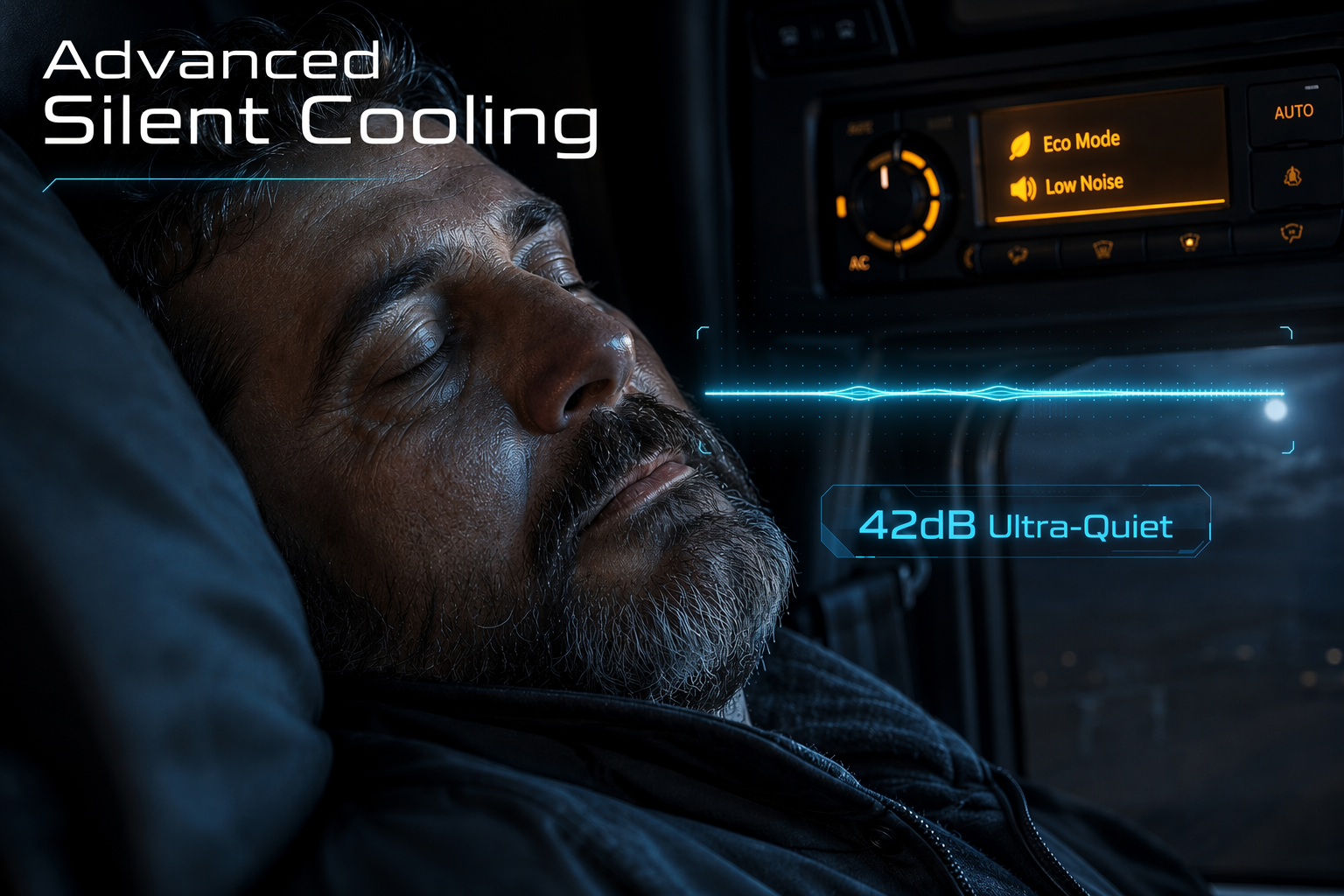
The B2B benefits extend beyond safety. In an industry facing a chronic driver shortage, the "quality of life" in the cab is a major factor in driver retention. Providing a quiet, temperature-controlled environment demonstrates a fleet's commitment to driver well-being. Reduced noise pollution decreases cortisol levels (the stress hormone), leading to better mental health and long-term career satisfaction.
The Economic Impact of Fatigue-Related Incidents
From a B2B perspective, the financial burden of driver fatigue is staggering. Insurance premiums, legal liabilities, and vehicle repair costs following a fatigue-related crash can reach hundreds of thousands of dollars. By investing in a quiet cooling environment, fleets are not just buying a comfort feature; they are implementing a preventative safety system. A well-rested driver is 20% more alert, significantly reducing the likelihood of micro-sleeps during daylight hours.
Advanced Acoustic Insulation and Engineering
Achieving a noise level under 50dB requires more than just a slow fan. Modern units like the DEFU R1 utilize:
Sound-Dampening Compressor Blankets: Specialized wraps that absorb high-frequency mechanical vibration.
Dynamic Balancing: Every fan blade is precision-balanced to eliminate the low-frequency "thrum" that often disturbs sleep.
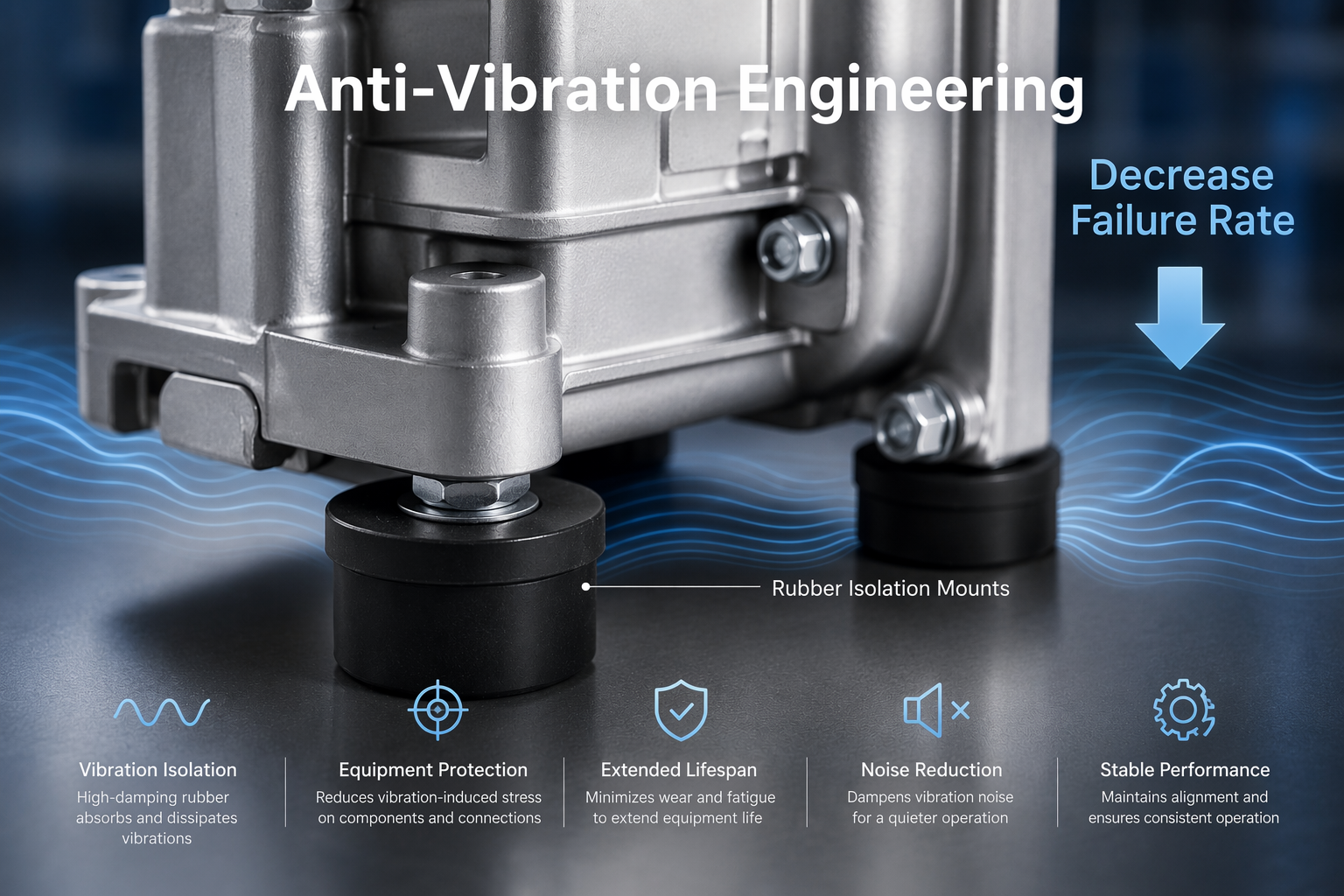
Rubber Isolation Mounts: These prevent the transmission of structural noise from the AC unit to the truck cab's chassis.
Battery Compatibility and Sustainability
Modern quiet coolers are designed to be Lithium-ready. For fleets transitioning to Lithium Iron Phosphate (LiFePO4) battery banks, these 12V/24V DC systems offer a perfect match. Lithium batteries can handle the steady discharge required for 8-10 hours of silent cooling without the voltage drops that plague traditional lead-acid batteries. This ensures that the unit maintains its quiet "Sleep Mode" efficiency throughout the night without the compressor needing to work harder to compensate for falling voltage.
Conclusion
Investing in quiet cooling technology is a strategic move for fleet managers. By maintaining noise levels under 50dB, companies can directly mitigate the risks of fatigue-related accidents, improve driver health, and enhance operational efficiency. In the outback or across the interstate, silence is not just golden—it's a critical component of modern logistics safety.