EN
EN

The Financial Engineering of Fleet Efficiency: A TCO-Driven Case for DEFU PAC Integration
The Financial Engineering of Fleet Efficiency: A TCO-Driven Case for DEFU PAC Integration
The Procurement Shift: From Price-per-Unit to Total Cost of Ownership (TCO)
In the sophisticated world of global logistics procurement, the "Lowest Bidder" is rarely the most profitable choice. Professional fleet managers have transitioned to a "TCO Model" that analyzes the entire lifecycle cost of a component, including fuel consumption, maintenance downtime, asset depreciation, and even driver recruitment costs. When viewed through this rigorous financial lens, a high-quality DEFU Parking AC system is not an "expense"—it is a high-yield "Financial Asset." This white paper deconstructs the ROI of DEFU integration, providing a mathematical framework for B2B decision-makers.

Metric 1: The "Direct Fuel Dividend" (DFD)
The most immediate ROI is the elimination of engine idling for climate control. A typical heavy-duty truck consumes 3.0 to 4.5 liters of diesel per hour of idle. In a typical operation involving 250 nights away from home and 8 hours of rest per night, a single truck idles for 2,000 hours annually. At a conservative price of $1.20 per liter, the "Direct Fuel Loss" is approximately $7,200 per vehicle, per year. A DEFU unit, which draws zero fuel from the engine, typically pays for its entire purchase and installation cost within the first 6-8 months of a single-driver operation. For a fleet of 50 vehicles, this equates to an annual bottom-line improvement of over $350,000.
Metric 2: The "After-Treatment Longevity" Factor
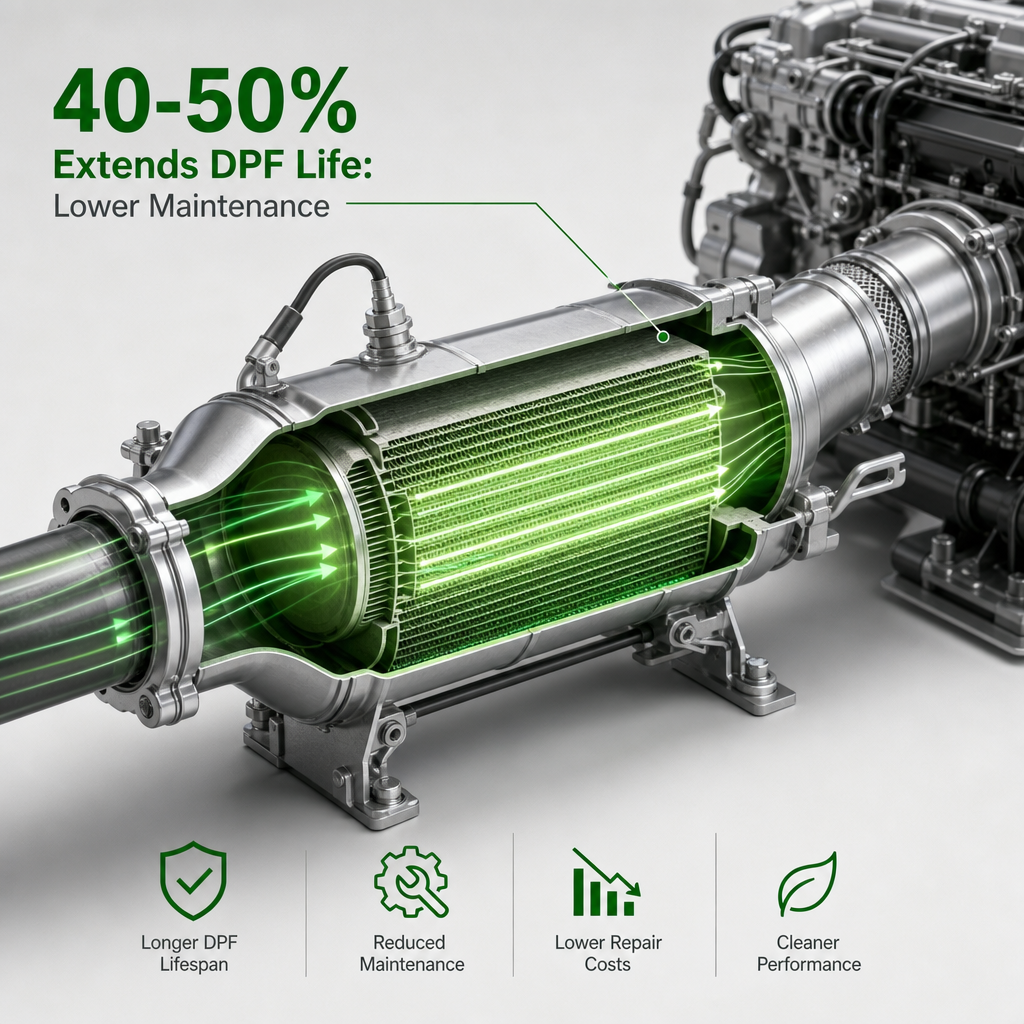
Modern Euro 6 and EPA 10 engines are equipped with complex Diesel Particulate Filters (DPF) and Selective Catalytic Reduction (SCR) systems. These systems are designed for high-temperature highway travel. At idle, combustion is incomplete, causing rapid "Soot Loading" in the DPF. A "Forced Regeneration" costs roughly $200 in fuel and downtime, and a full DPF cleaning can cost $2,000. By eliminating 2,000 hours of low-temperature idling, a DEFU unit extends the life of these critical components by 40-50%. In a five-year vehicle lifecycle, this maintenance avoidance adds $5,000+ to the per-vehicle profit margin.
Metric 3: Asset Preservation and Resale Value
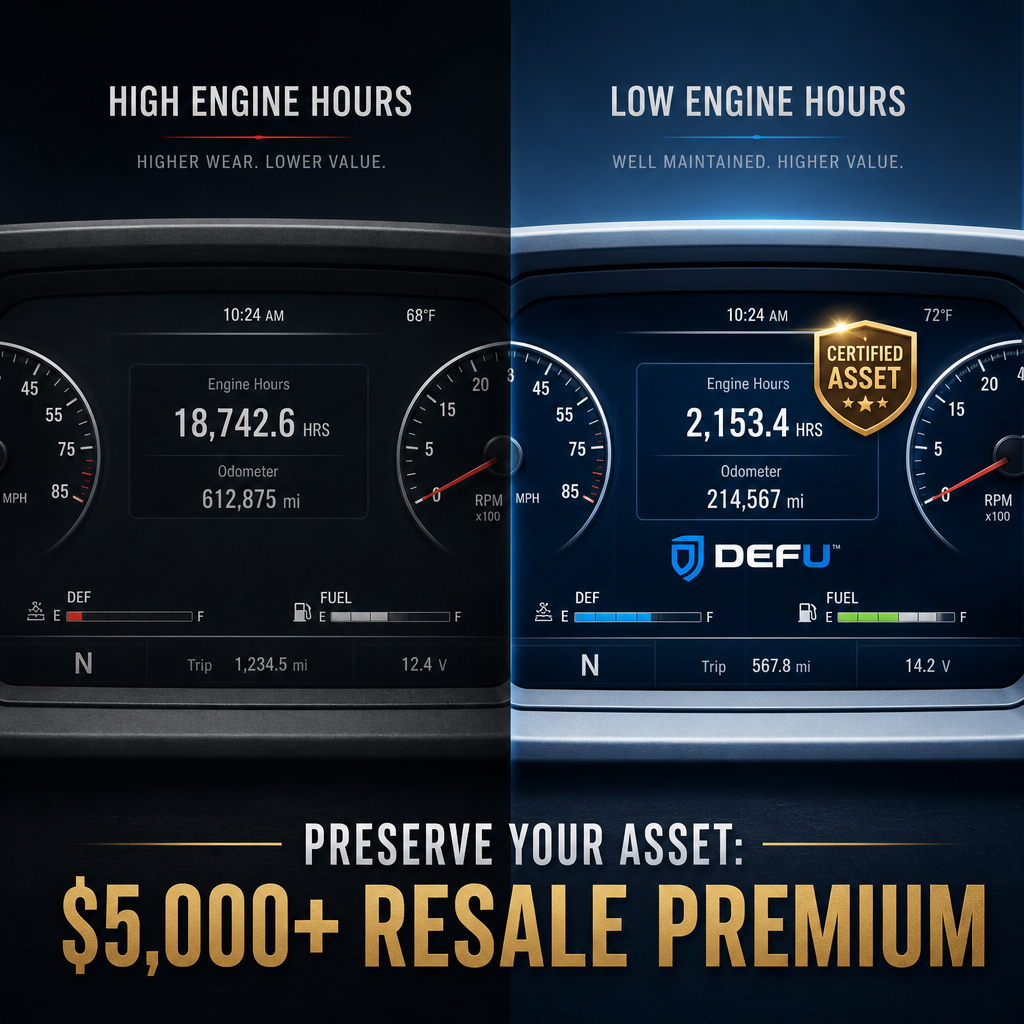
In the secondary market, "Engine Hours" are as important as "Odometer Miles." Every 1,000 hours of idling is equivalent to approximately 30,000 miles of engine wear in terms of oil degradation and bearing stress. A truck that has spent its life with a DEFU PAC will show significantly fewer engine hours than a "traditional" idle-dependent truck. In the North American and Australian markets, a "Low-Hour" truck can command a resale premium of $3,000 to $5,000. By preserving the mechanical integrity of the powertrain, DEFU ensures that the vehicle remains a liquid, high-value asset at the end of its lease term.
Metric 4: The "Driver churn" Mitigation Model
The global driver shortage has made "Retention" a key business KPI. The cost to replace a single experienced driver (recruitment, onboarding, training) is estimated by the ATA at $8,000 to $12,000. Driver surveys consistently rank "Rest Quality" as a top-three factor for job satisfaction. A fleet that provides silent, reliable DEFU cooling is demonstrably more attractive to high-quality drivers. If DEFU integration prevents even a 5% increase in driver turnover, the savings in recruitment costs alone can fund the entire PAC program across a fleet.

Conclusion: The Math of Market Leadership
In the logic of B2B logistics, the only sustainable strategy is "Efficiency." DEFU provides the "Hard Data" to back up its engineering. We provide our B2B partners with specialized "ROI Calculators" that allow you to plug in your specific fuel costs, labor rates, and idling times to generate a customized investment prospectus. Don't buy a parking AC based on the lowest price; invest in DEFU based on the highest return.