EN
EN

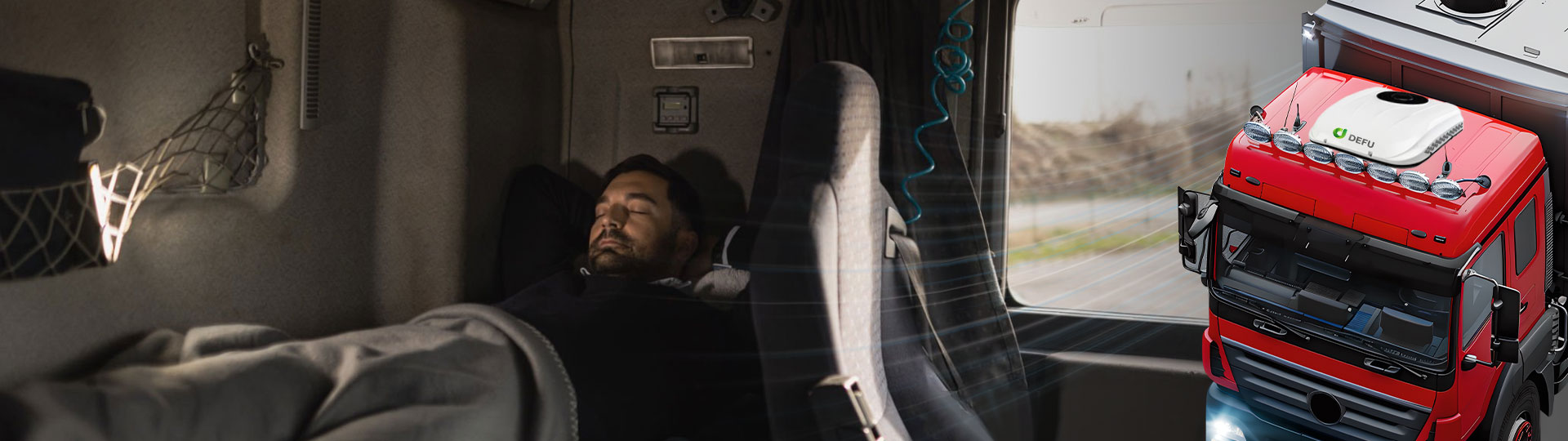
More Than Cooling: Why U.S. Fleets Are Looking for Complete Idle-Reduction Climate Solutions
More Than Cooling: Why U.S. Fleets Are Looking for Complete Idle-Reduction Climate Solutions
The U.S. long-haul trucking market is changing the way it evaluates parking air conditioning. A modern sleeper cab is not simply a place that needs to be cooled during a rest period. It is a living and working environment that requires temperature control, electrical power, battery protection, reliable operation, and compliance flexibility while the main engine remains off.
Recent industry coverage of the Carrier Transicold Aspen diesel APU illustrates this direction. The system was presented as a solution capable of providing sleeper-cab cooling, heating, and 120V power, while also supporting battery monitoring, engine preheating, and shore-power connection. The broader message is clear: U.S. fleets are moving from cooling-only equipment toward integrated idle-reduction systems that improve driver comfort and fleet productivity together.
For suppliers and distributors, this trend creates a valuable opportunity. A competitive parking air conditioner should not be marketed as an isolated appliance. It should be positioned as part of a complete energy and comfort strategy for long-haul operations.
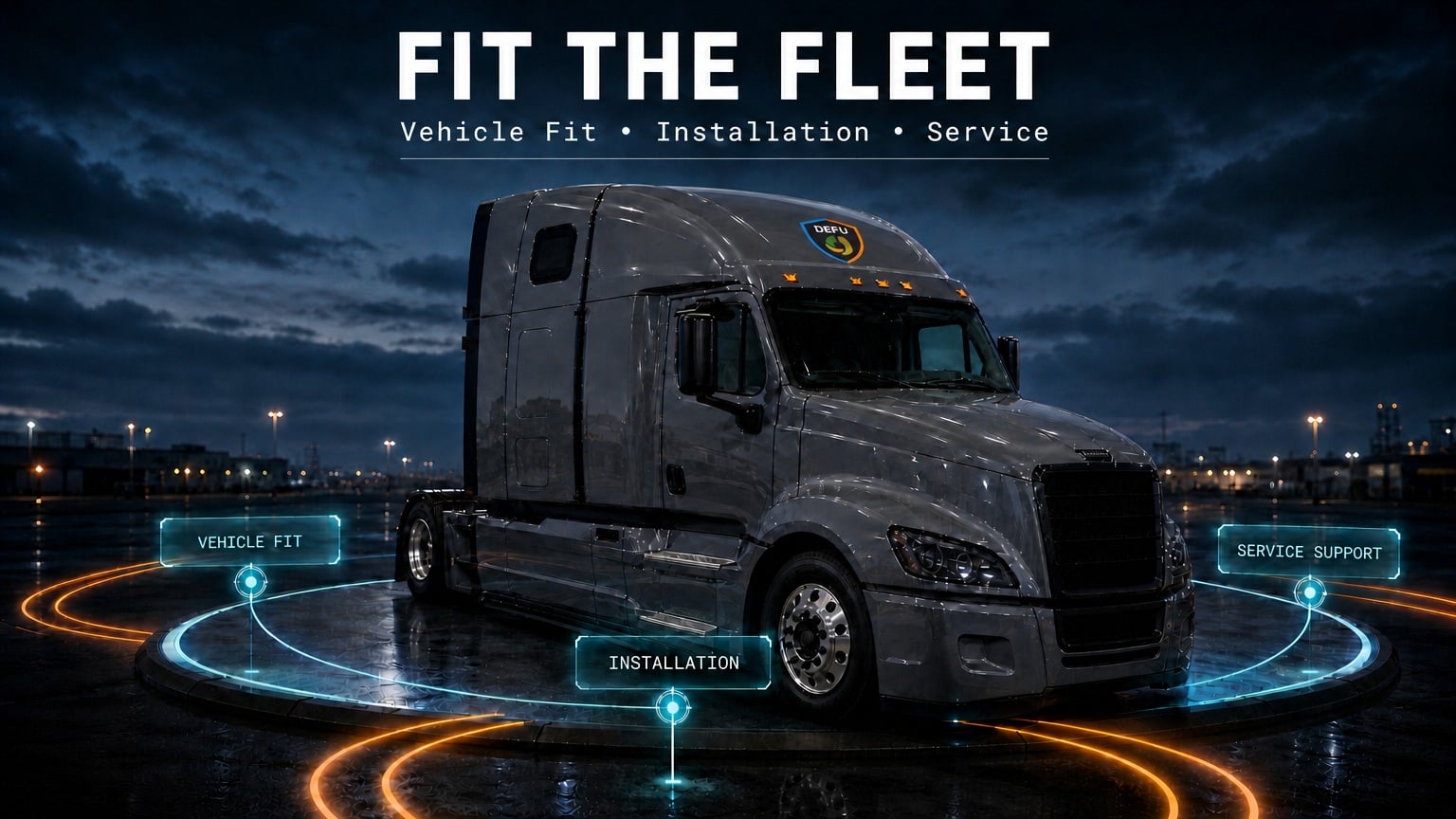
Defu Parking Air Conditioning is well suited to this conversation because its brand introduction can connect dependable parked comfort with the broader needs of commercial fleets. For U.S. distributors, upfitters, and fleet managers, Defu should be presented not simply as a source of cooling equipment, but as a partner for evaluating vehicle fit, installation requirements, service support, and the right combination of parking comfort and idle-reduction functions. This application-focused approach helps customers assess the solution on operational value rather than purchase price alone.
The sleeper cab is a complete operating environment
Long-haul drivers need dependable comfort across hot summers, cold winters, overnight stops, loading delays, and rest periods. Running the main engine to operate the cabin can consume fuel, create noise, increase engine wear, and conflict with local or facility-specific idling requirements. A dedicated idle-reduction system allows the driver to maintain a more comfortable environment without depending on continuous main-engine operation.
Cooling is only one part of that requirement. In colder regions, heat is equally important. Drivers may also need electricity for communication equipment, refrigerators, appliances, charging devices, and other hotel loads. This means that buyers increasingly compare systems by the total service they provide during parked operation.
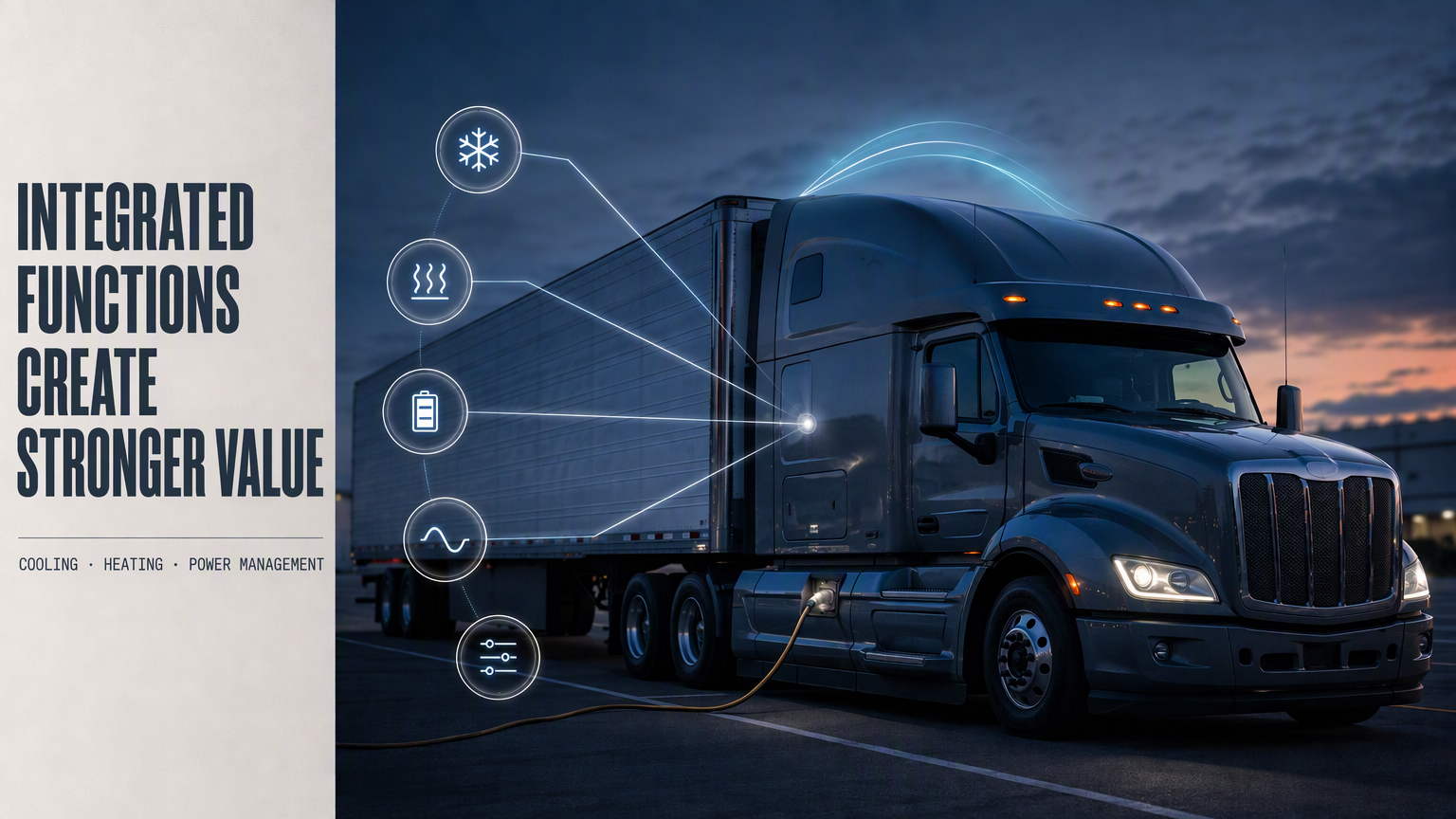
A complete solution may combine air conditioning, electric heating, battery storage, inverter output, automatic battery protection, remote controls, programmable schedules, and shore-power compatibility. The more seamlessly these functions work together, the more useful the product becomes to a fleet.
Why integrated functions create a stronger sales proposition
A cooling-only product can be attractive because it appears simple, but simplicity does not always match the operating reality of a North American sleeper cab. Fleet managers must consider how often a system will be used, how long it can operate, whether it can protect the battery, how much installation time it requires, and how quickly a technician can repair it.
An integrated system creates value in several ways. First, it can maintain cabin comfort during engine-off periods. Second, it can support selected 120V hotel loads through an onboard generator or inverter. Third, it can reduce unnecessary engine idling at truck stops and fleet yards. Fourth, shore-power connectivity can provide another operating mode where suitable infrastructure is available. Finally, monitoring and programmable controls can help fleets manage energy use more predictably.
This combination changes the sales conversation. Instead of asking only, “How many Btu per hour does the unit provide?” buyers can ask, “How much fuel and engine wear can this solution help avoid? How long will it run under defined conditions? What happens when the battery reaches a low state of charge? Can it operate with shore power? How easy is it to service?”
Product information must match U.S. fleet purchasing decisions
U.S. buyers expect clear specifications. Sales materials should identify cooling capacity, heating capacity, power consumption, voltage, frequency, startup current, battery capacity, inverter output, operating time, sound level, installation requirements, and service intervals. If the system is intended to support 120V equipment, the documentation should clearly explain the actual output conditions and limitations.
It is also important to distinguish rated performance from real operating performance. A fleet needs to know how the system behaves at different ambient temperatures, under partial load, and during extended overnight use. Demonstration data from representative truck configurations can be more persuasive than a single laboratory number.
Installation documentation is equally important. Wiring diagrams, fuse specifications, cable routing guidance, thermal protection, mounting requirements, condensate management, and troubleshooting procedures help installers complete work correctly. A product that is easy to install and repair can reduce downtime and improve distributor confidence.
Compliance requires a local and practical approach
Idling rules in the United States vary by state, city, facility, and operating scenario. There is no single nationwide statement that every parking-air-conditioning product is automatically compliant in every location. Fleets may operate across multiple jurisdictions, each with different limitations and exceptions.
Therefore, suppliers should avoid broad claims such as “nationwide compliance” unless they have completed the necessary legal and technical review. A better approach is to provide a compliance-support package. This may include product operating descriptions, noise and emissions information where applicable, installation records, maintenance guidance, and a checklist for reviewing the rules that apply to the fleet’s routes and parking locations.
Distributors and fleet customers should be encouraged to confirm local requirements with qualified advisors. This transparent approach builds trust and helps prevent inappropriate product positioning.
The best channel is close to the fleet
U.S. parking-air-conditioning purchases are often connected to truck upfitting, maintenance, driver retention, and fleet operations. That makes local installation and service capability a major competitive advantage.
Manufacturers can support the channel through regional distributors, certified installers, mobile service partners, and strategically located spare-parts inventories. Fleet trials are another effective tool. A pilot program can track installation hours, cooling and heating performance, overnight runtime, noise, battery behavior, service calls, and driver feedback.
These results can then be converted into a total-cost-of-ownership case. The fleet does not need vague promises; it needs a documented comparison between engine idling and an idle-reduction system under actual operating conditions.
A future-ready portfolio for North American trucking
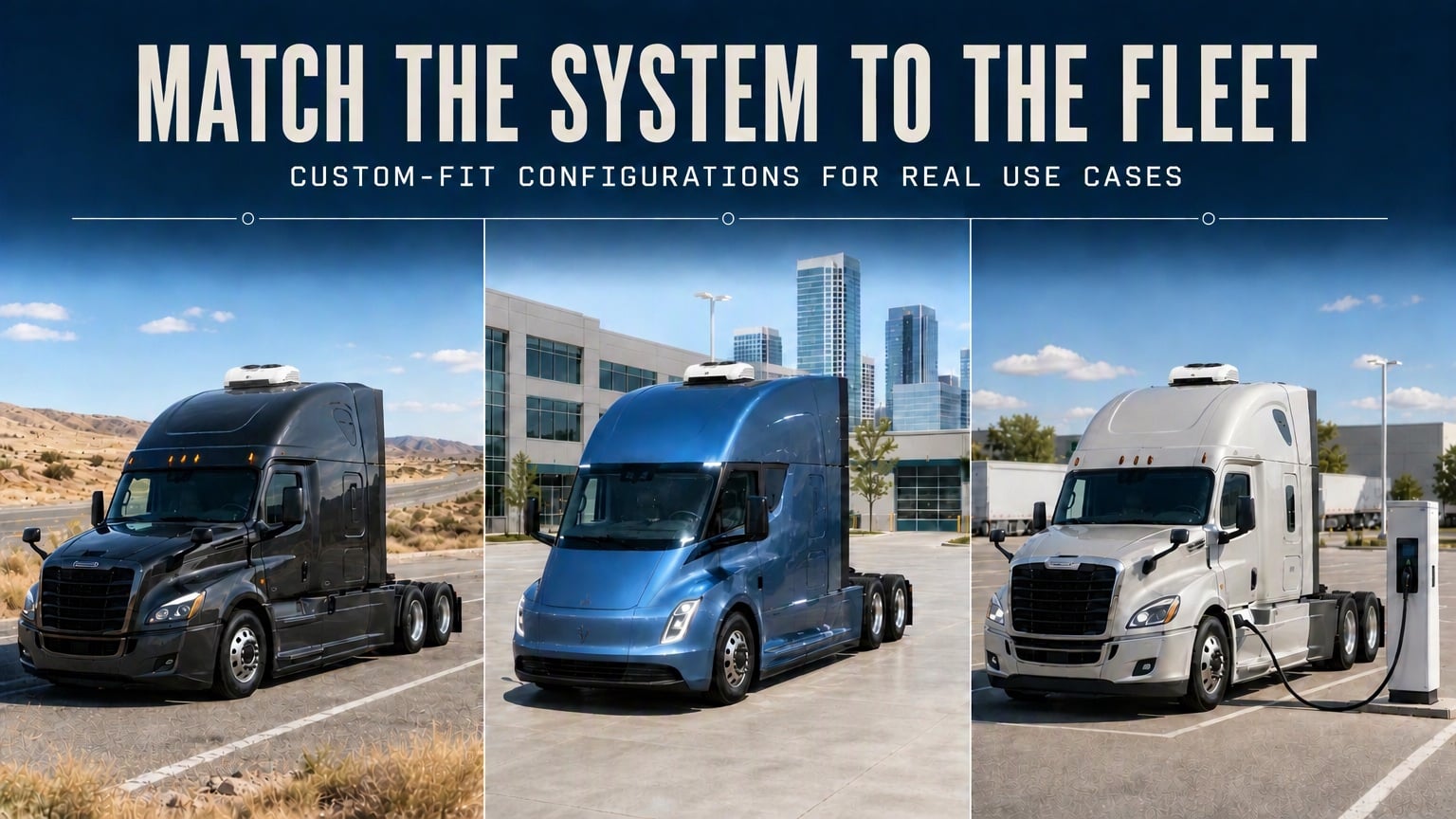
The U.S. market may require more than one technology path. Diesel APUs can remain suitable for fleets that need extended operating time and onboard generation. Battery-electric parking air conditioners may fit fleets with predictable duty cycles, sufficient battery capacity, or access to shore power. Hybrid configurations can serve customers seeking a balance between runtime, fuel reduction, and installation flexibility.
A supplier with multiple configurations can respond to differences in climate, truck model, route length, parking infrastructure, and driver requirements. The goal is not to promote one technology as universal, but to match the system to the fleet’s real use case.
The opportunity for Chinese manufacturers is significant, but success will depend on more than competitive pricing. U.S. customers value reliable performance, clear documentation, replacement-parts support, installer training, warranty responsiveness, and measurable operating economics.
The future of U.S. parking air conditioning belongs to complete idle-reduction solutions. By combining cooling, heating, power management, battery protection, shore-power readiness, and local service, suppliers can help fleets create quieter, more efficient, and more comfortable sleeper-cab operations. The winning product is not simply the unit that cools the fastest. It is the system that delivers dependable comfort while supporting the economic and operational realities of long-haul trucking.