EN

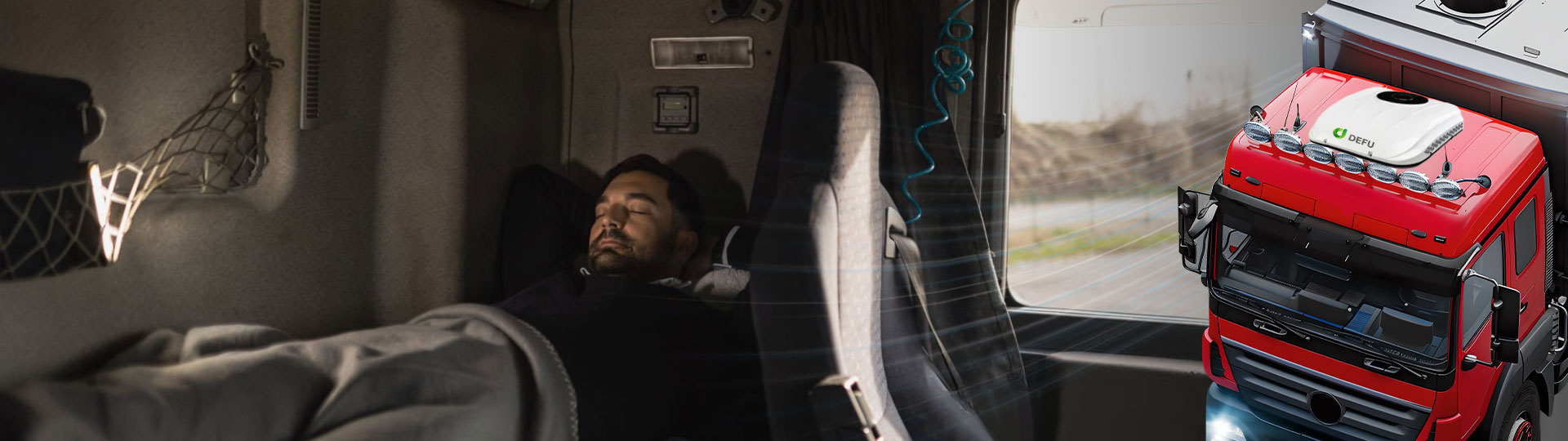
Idle-Free Winter Heating for Fleets: Diesel Hydronic vs Engine Idling
Idle-Free Winter Heating for Fleets: Diesel Hydronic vs Engine Idling
Summer gets the attention: air conditioning sells in July, and parking coolers get the marketing budget. But for a fleet with a real winter, heating is where the money leaks out — not in hardware, but in fuel burned at idle, engine hours accumulated for no distance, and drivers who leave the engine running because the alternative is a cold cab.
This article compares the three ways fleets actually heat a cab or a body, and where DEFU's Enclosed Diesel Hydronic Thermal Boiler Station and All-in-One Diesel Hydronic Heater fit.
What idling actually costs
An idling heavy engine burns fuel to produce almost no useful work. The useful output is a few kilowatts of heat that a dedicated heater produces from a fraction of the fuel, because its combustion is optimized for exactly that task.
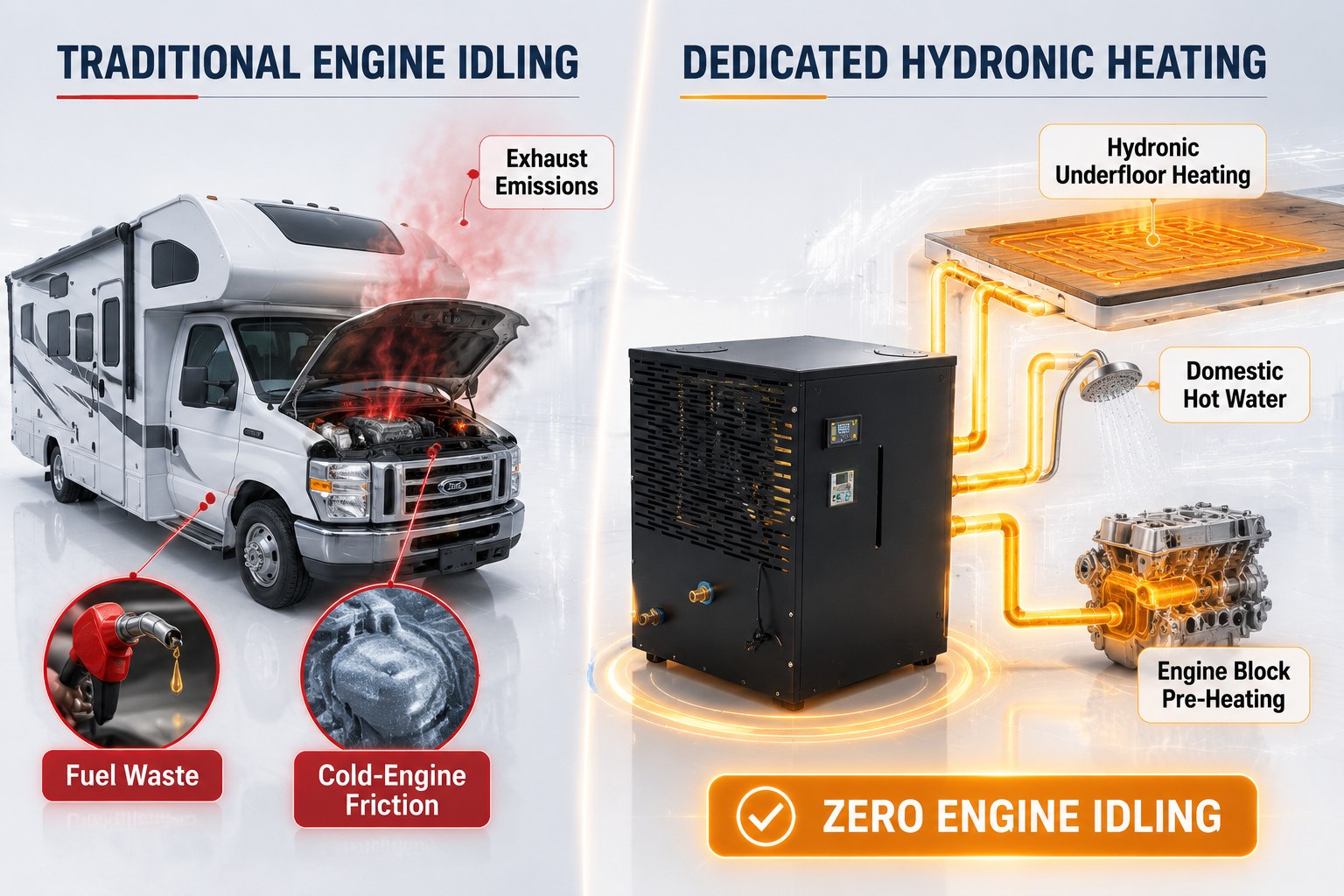
Three costs stack up beyond the fuel bill. Engine hours accumulate without distance, and resale value plus service intervals are driven by hours. Repeated cold idling does not warm an engine as efficiently as load does. And anti-idling rules are enforced in a growing number of jurisdictions, where "the driver was cold" is not a defence.
The three realistic options
Engine idling gives maximum heat at zero additional hardware, and maximum waste — and no heat at all with the engine off.
A diesel air heater heats air directly: fast to install, inexpensive, effective in a cab, but limited when heat must reach a box, tank, wash station or engine block.
A diesel hydronic heater heats a coolant loop, and that loop can then feed several heating loads: a cab heat exchanger, a tank coil, domestic hot water or engine pre-heat. More installation work, far more capability per unit. The choice is not which is better, but whether you need heat as air or as a fluid you can route.
Hydronic stops being a luxury in four situations: you need engine pre-heating, which is the best thing you can do for winter fuel consumption and starter life; you need heat in more than one place from one boiler; you need hot water for crew facilities or wash-down; or you need heating on shore power as well as on the truck, which is where dual voltage matters.
The two DEFU platforms
The All-in-One Diesel Hydronic Heater covers 10–40 kW in one compact body: integral fuel-water tank, brazed plate heat exchanger, dual voltage DC 12/24 V and AC 110/220 V, dimensions 750 × 500 × 500 mm. It suits trucks, motorhomes and light commercial builds where the heater fits an existing space and serves a single loop. The brazed plate exchanger is why it responds quickly, with very little thermal lag.
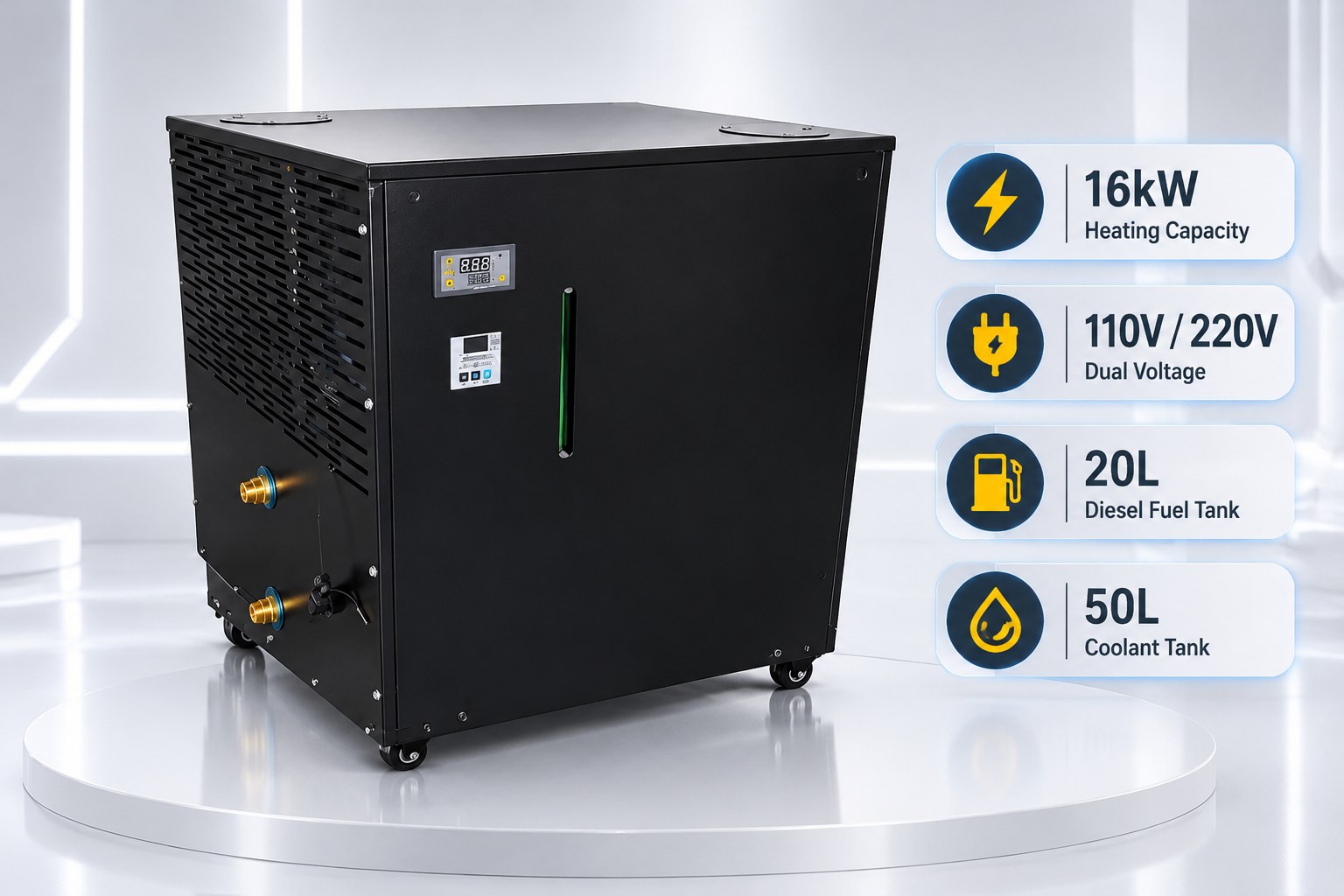
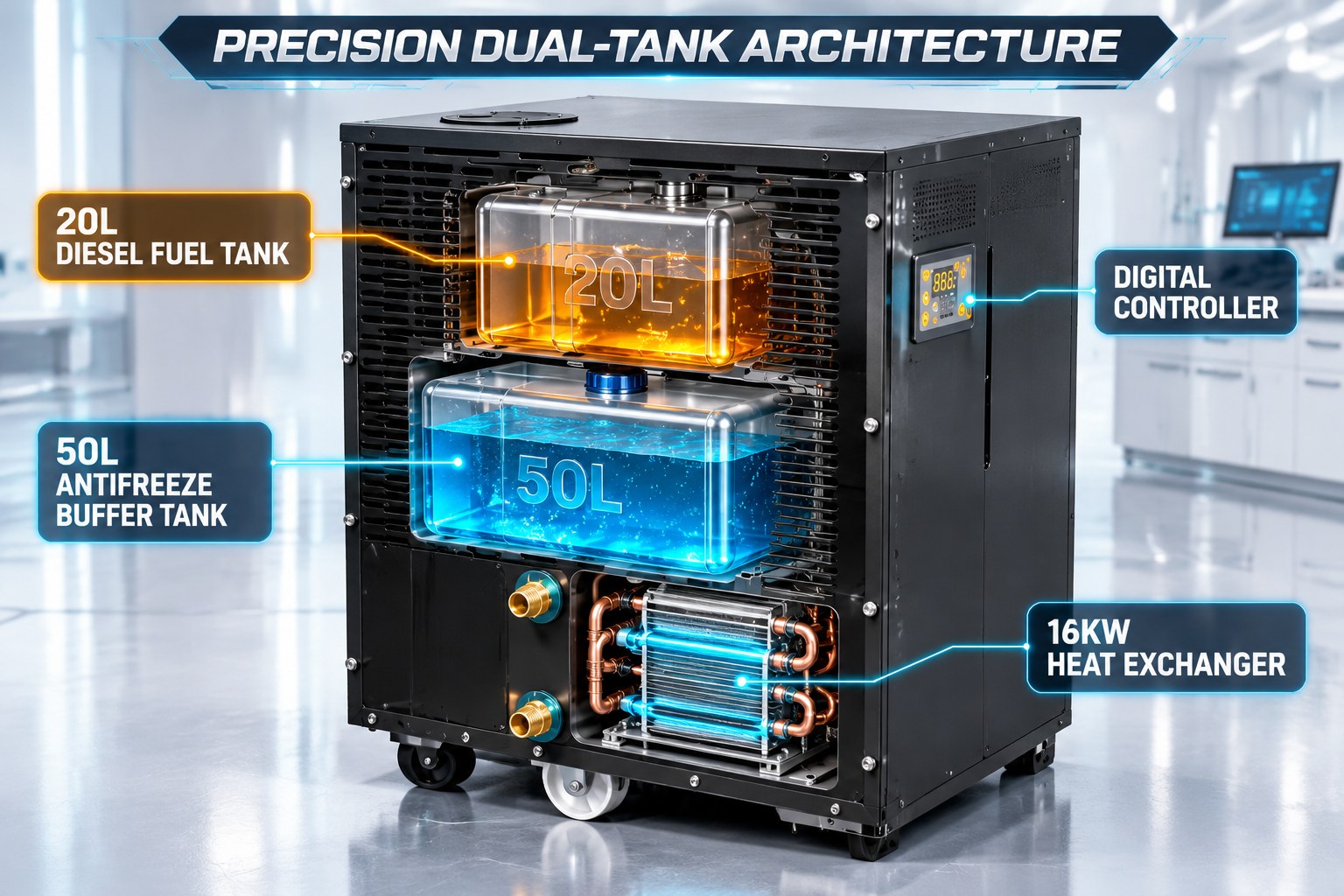
The Enclosed Boiler Station delivers 16 kW from a cabinet enclosure with 110/220 V dual voltage, a 20 L diesel tank, a 50 L coolant tank and 650 × 350 × 600 mm dimensions. Enclosure and coolant volume make it a station rather than a heater: enough thermal mass to ride out demand spikes, enough fuel for extended unattended operation. It is the unit for depot heating, cabin heating, frost protection of an unoccupied building, or a workshop with several simultaneous draws.
The distinction is simple. The all-in-one is a heater you install; the boiler station is a thermal plant you connect things to.
Sizing without over-thinking it
Three inputs decide most of the answer: heat load in kW from cab volume, insulation, glazing and design ambient; loop volume in litres, because more coolant means slower warm-up and steadier temperature; and duty pattern, since unattended frost protection differs from a driver warming up before a shift. Size to the design temperature you operate in, not the coldest night of the year.
Installation points that decide whether it works
Route exhaust away from air intakes, doors and cargo. Provide dedicated clean combustion air, never drawn from the heated space. Fill and bleed the coolant circuit properly, because air in the loop is the first cause of "the heater runs but there is no heat". For dual voltage units, use an interlocked changeover rather than a shared terminal.
Fleets that switch from idling report the same three things: the cab is warm before the shift because pre-heat is possible, the windows stay clear, and the noise is gone.