EN


Fleet Procurement Guide: How to Compare Truck Parking Air Conditioners Beyond Price
Fleet Procurement Guide: How to Compare Truck Parking Air Conditioners Beyond Price
For a fleet buyer, choosing a truck parking air conditioner is not only a question of unit price. The purchase affects installation time, battery performance, driver comfort, spare-parts planning, workshop workload, and long-term operating confidence. As fleets prepare budgets and maintenance plans for the autumn and winter season, a structured procurement process can prevent the hidden costs caused by incorrect specifications or weak after-sales support.
Start by defining the fleet application. List vehicle models, cab types, nominal voltage, battery arrangement, route climate, typical parking duration, expected stationary-cooling hours, and installation locations. A fleet with one standardized truck model may be able to use a single configuration, while a mixed fleet may require several voltage versions, brackets, wiring lengths, or mounting solutions. This information should be shared with the supplier before a final model is selected.
Compare technical compatibility first. The supplier should provide rated voltage, current range, recommended fuse, installation dimensions, mounting requirements, airflow information, low-voltage protection, controller functions, and maintenance needs. Ask how the performance data was measured. Cooling capacity, power consumption, noise, and runtime should be connected to test conditions such as ambient temperature, cab size, battery condition, and operating mode. Transparent specifications are more useful than a long list of unsupported marketing adjectives.

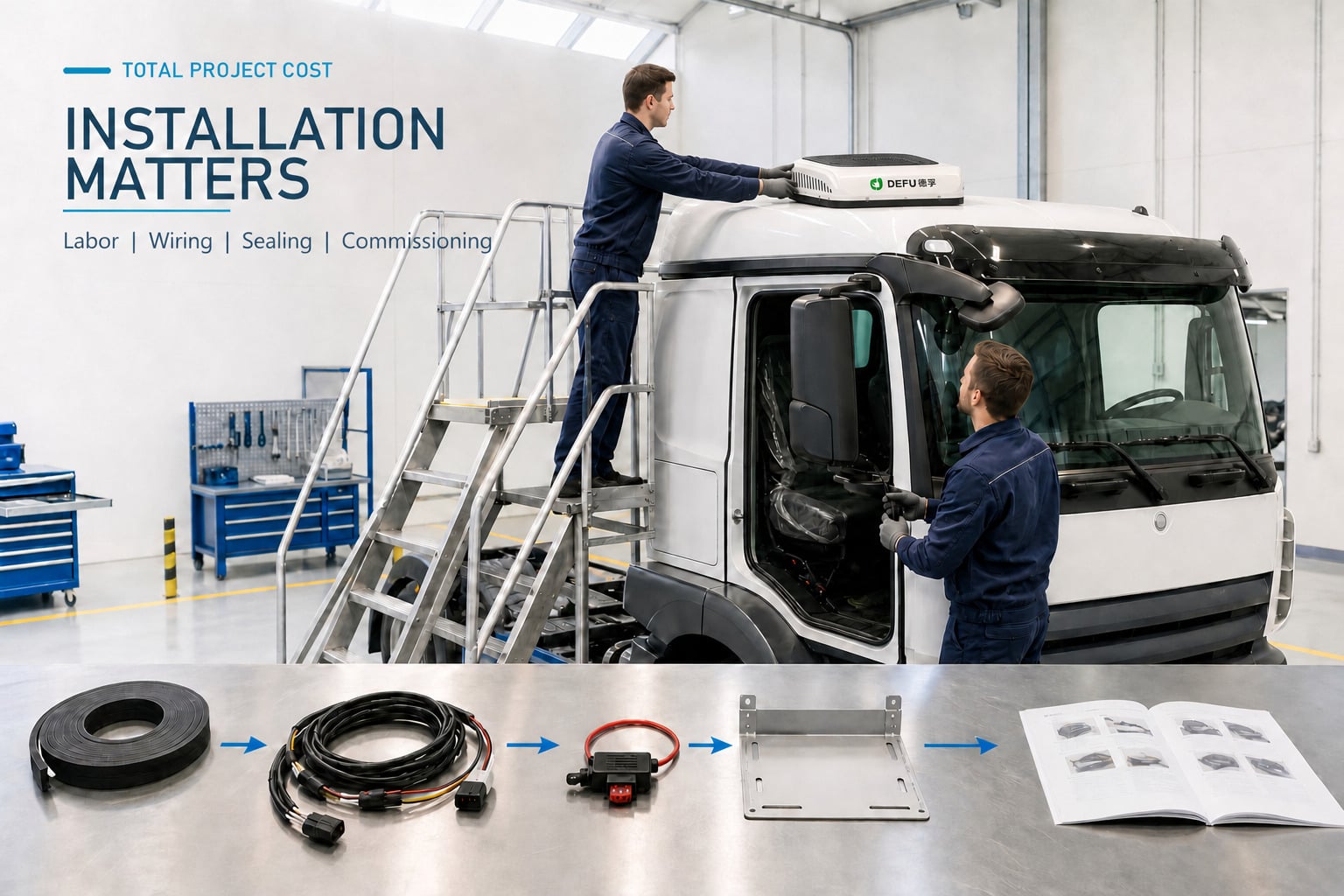
Installation is part of the procurement cost. Calculate workshop labor, roof preparation, sealing materials, electrical cables, fuses, brackets, drainage, commissioning, and driver training. If the product requires a special opening or custom bracket, include the time and tooling. A supplier that offers a complete installation kit and a clear manual may reduce the total project cost even if its product price is not the lowest.
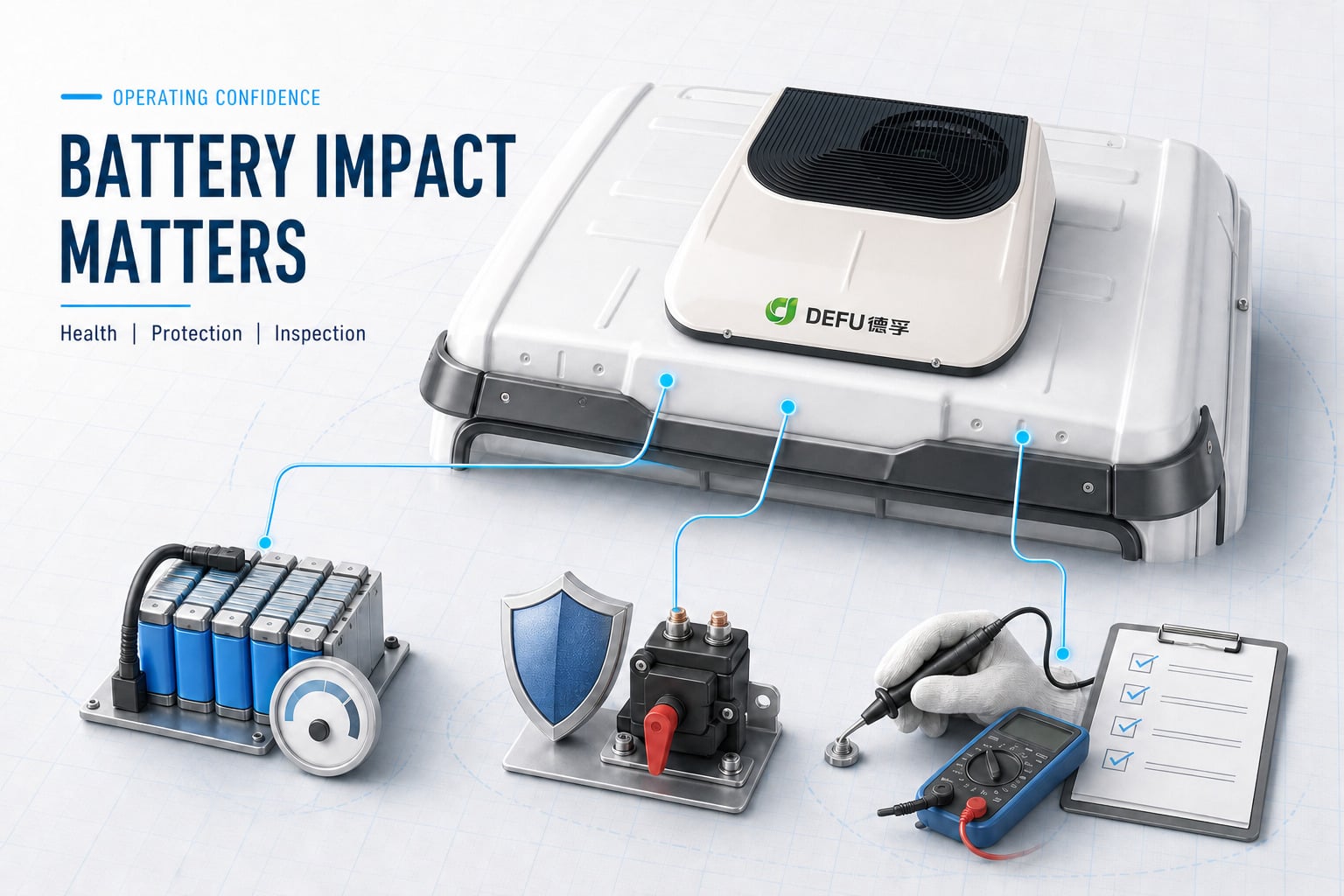
Battery impact should be included in the evaluation. A parking air conditioner that works well with a healthy auxiliary battery may create complaints if the fleet has older batteries or a different charging system. Ask the supplier to define battery recommendations and low-voltage protection. Include the expected battery inspection or replacement cycle in the operating-cost model. A proper pilot should measure protection events and battery voltage, not only driver satisfaction.
After-sales support is another purchasing criterion. Confirm the warranty process, spare-parts availability, fault-code guidance, technical response time, and regional service contacts. Ask whether the supplier can provide manuals in the destination market language. For a fleet with several depots, request a recommended spare-parts list and a technician training package. These details can reduce downtime when the fleet expands.
A pilot program is safer than an immediate large deployment. Select representative vehicles with different routes, cab designs, and battery conditions. Establish baseline data for stationary-cooling-related idling, driver comfort, battery events, maintenance calls, and installation time. After installation, record the same indicators over a defined period. Compare results under similar weather and operating conditions. The pilot should produce a written configuration standard for the next purchase phase.

The independent site can support procurement with a dedicated fleet page. Include a vehicle application form, downloadable specification sheets, installation photographs, maintenance guidance, and a clear quotation process. Suggested form fields include vehicle model, annual quantity, voltage, cab type, destination market, desired delivery schedule, and required branding. This turns general website traffic into complete commercial leads.
Seasonal content should address the buyer’s current decision. In October, publish a “fleet winter planning” article focused on battery checks, workshop capacity, spare parts, and driver communication. Do not rely on a short-term discount message. Fleet customers want predictable implementation and measurable service value.
Conclusion
The best truck parking air conditioner is not automatically the cheapest unit. Fleet buyers should compare compatibility, installation, battery impact, service, spare parts, testing, and total operating value. By helping customers plan a pilot and document the full application, Defu can compete through reliability and technical support while building stronger long-term fleet relationships.
A procurement scorecard can make supplier comparison more objective. Assign separate scores for voltage compatibility, documented performance, installation time, battery protection, spare-parts availability, warranty response, technical documentation, and pilot support. Keep price as one category rather than the entire decision. This method helps procurement teams explain the final choice internally and gives suppliers a clear opportunity to improve their proposal.