EN
EN

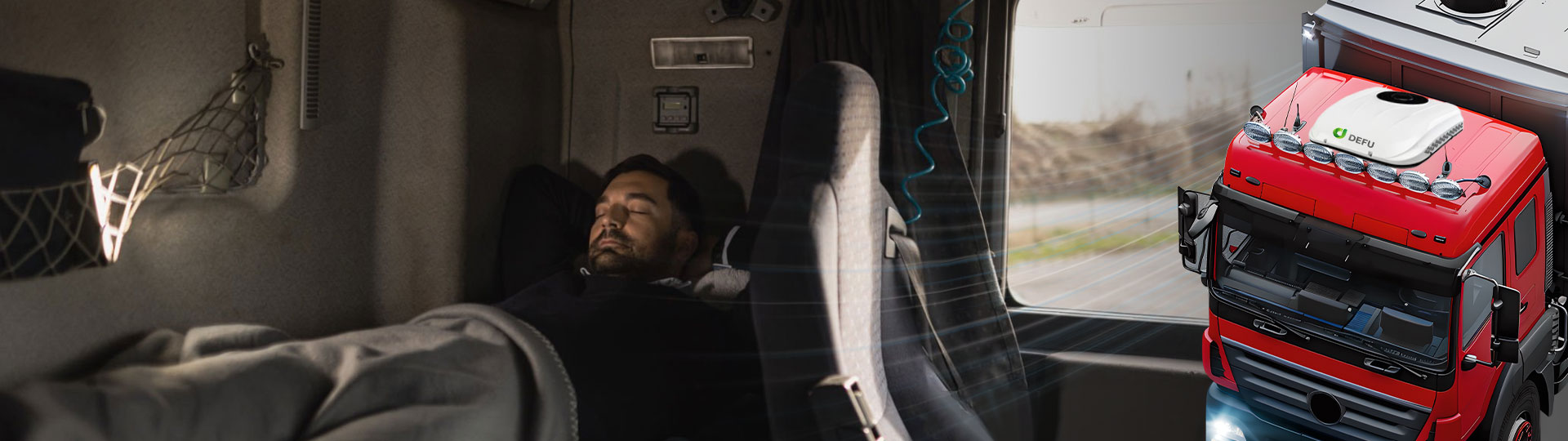
Corrosion Resistance: Why Copper Condensers are Mandatory for Coastal Routes like BR-116
Corrosion Resistance: Why Copper Condensers are Mandatory for Coastal Routes like BR-116
For Brazilian trucking companies operating along the Atlantic coast, the environment is a constant enemy. Routes like the BR-116, which stretches from Ceará down to Rio Grande do Sul, expose vehicles to high levels of salinity and humidity. While most components of a truck are treated for rust, the air conditioning system is often the first to fail due to "salt air" (maresia).
At DEFU, we have identified that the standard aluminum condenser—commonly found in budget AC units—is insufficient for these conditions. This is why we advocate for copper condensers for all Brazilian coastal operations.
The Science of Salt Air Corrosion
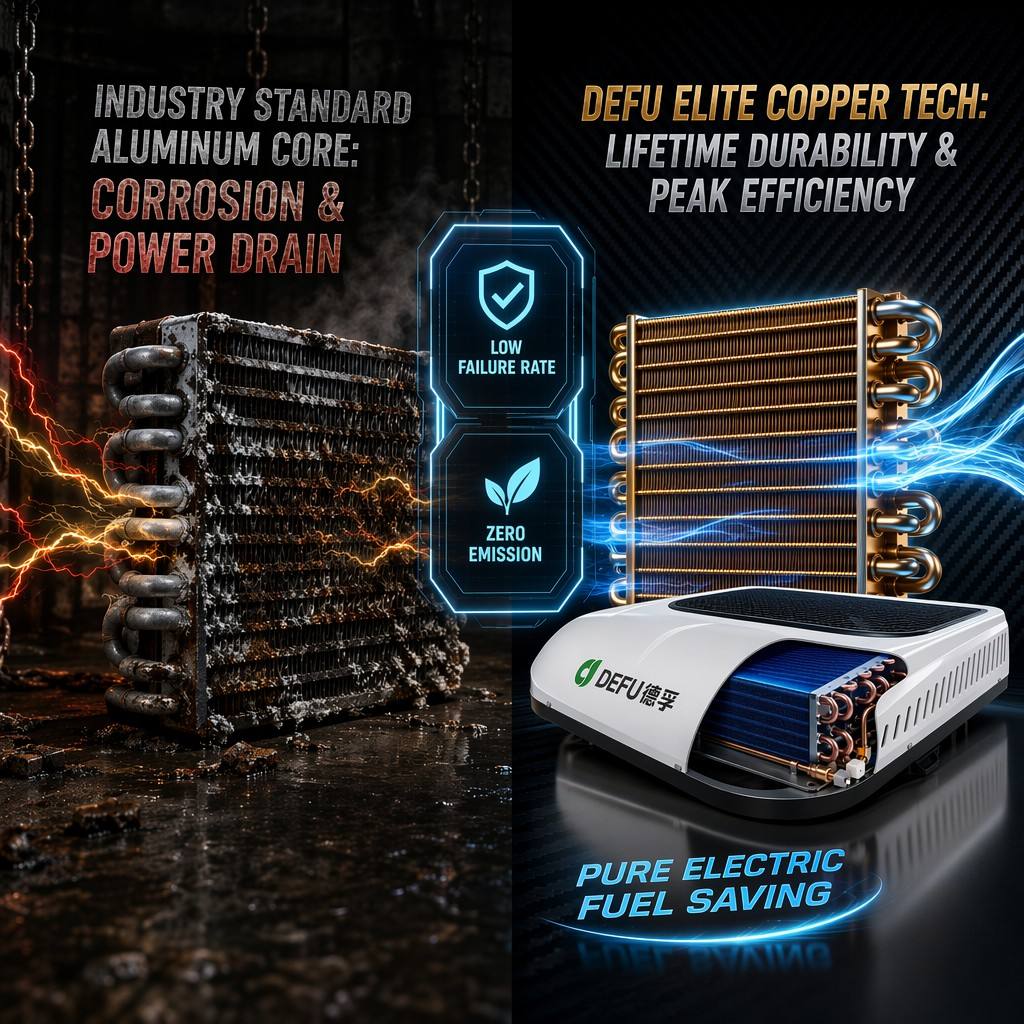
Aluminum is lightweight and thermally efficient, but it is highly susceptible to galvanic corrosion when exposed to salt. On routes like the BR-101 or BR-116, the salt particles in the air react with the aluminum fins and tubes, leading to microscopic pits. Over time, these pits become leaks, causing the refrigerant to escape and the ar condicionado para caminhão parado to stop working.
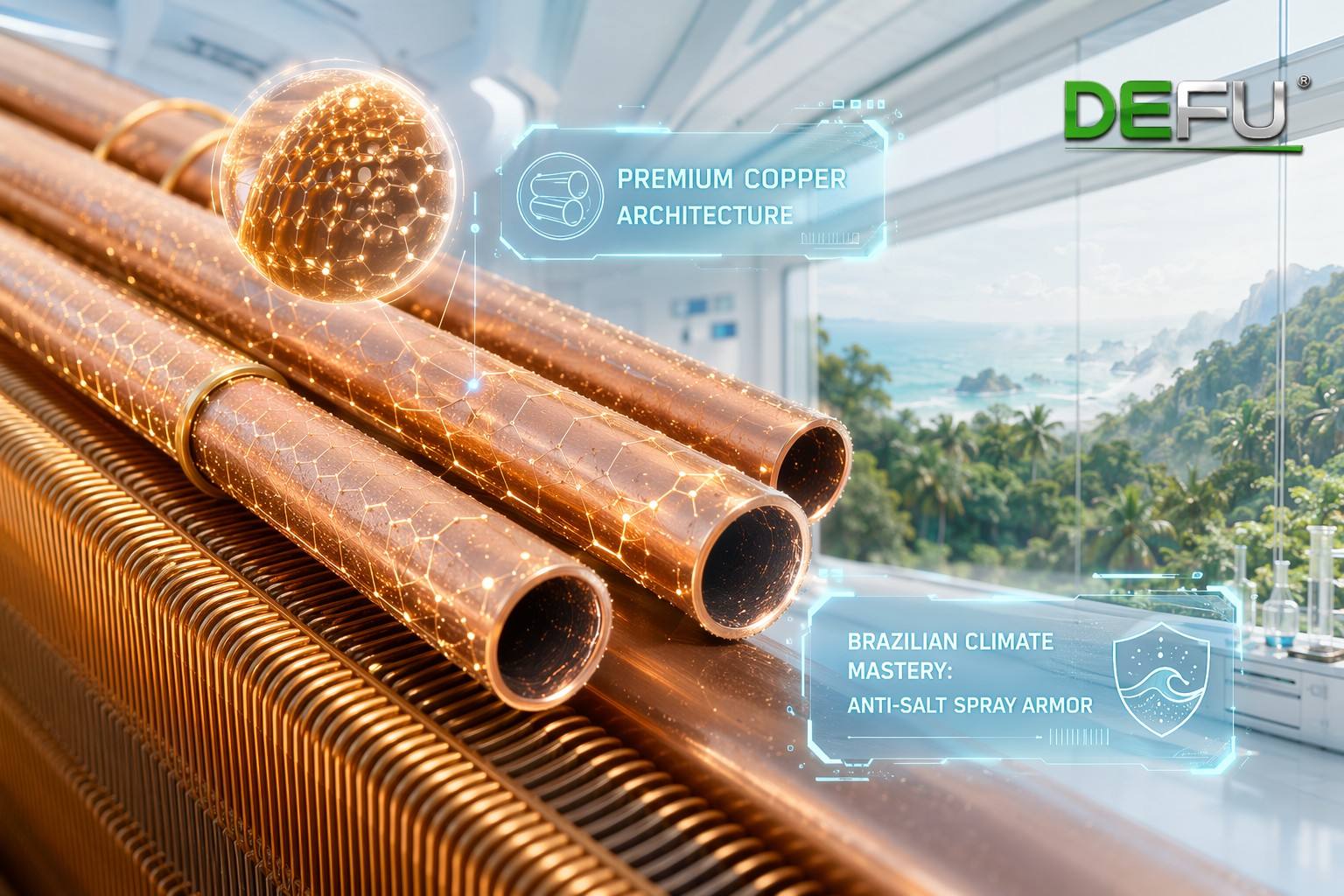
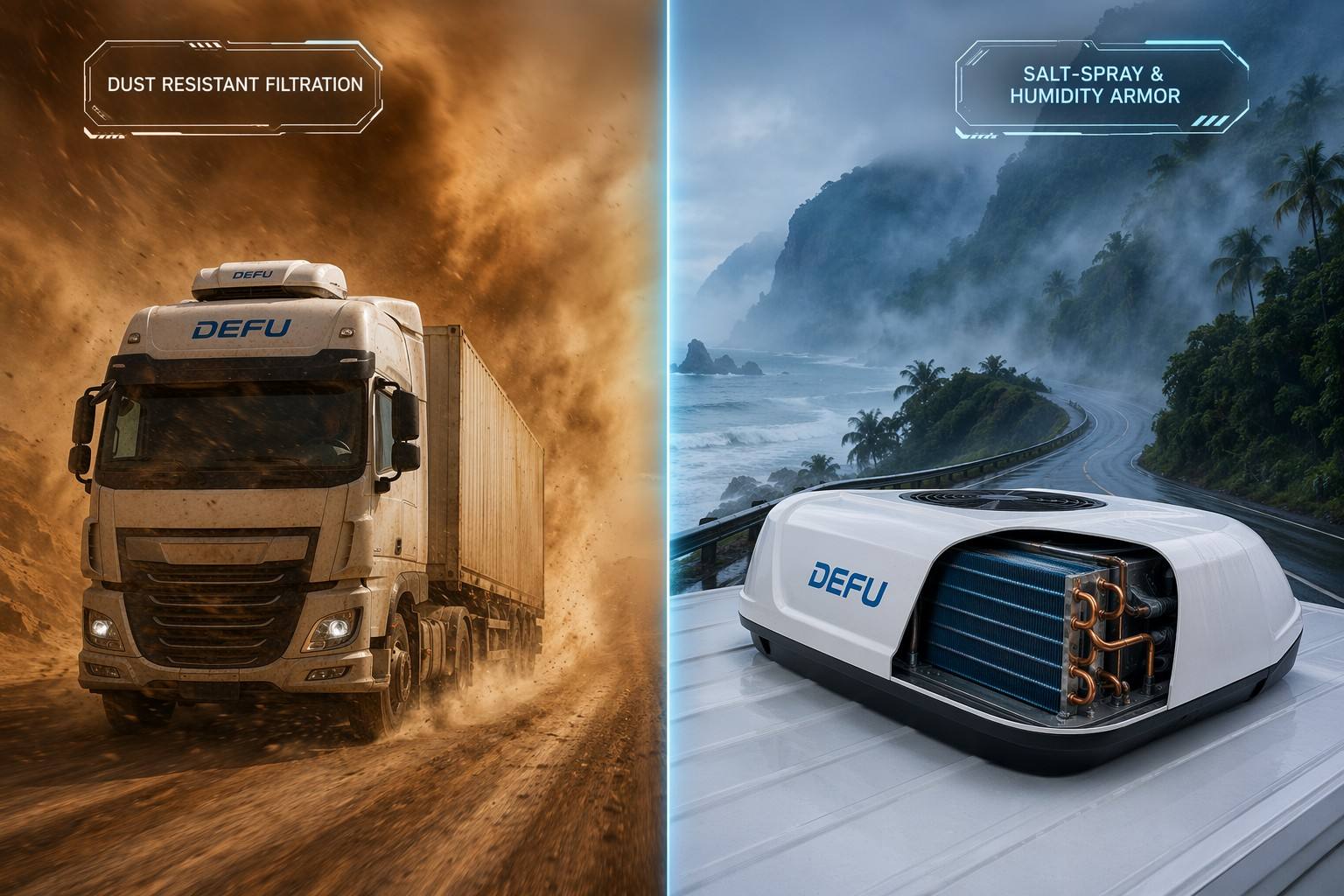
Copper, however, is naturally more resistant to this type of atmospheric corrosion. When combined with DEFU’s specialized anti-corrosive hydrophilic coating, a copper condenser can last 3 to 4 times longer in coastal environments than a standard aluminum one.
DEFU’s Technical Edge in Material Customization
As a dedicated B2B manufacturer, DEFU offers material customization specifically for the Brazilian market. We understand that a "one size fits all" approach doesn't work for a country as geographically diverse as Brazil.
Our Coastal-Ready Specs:
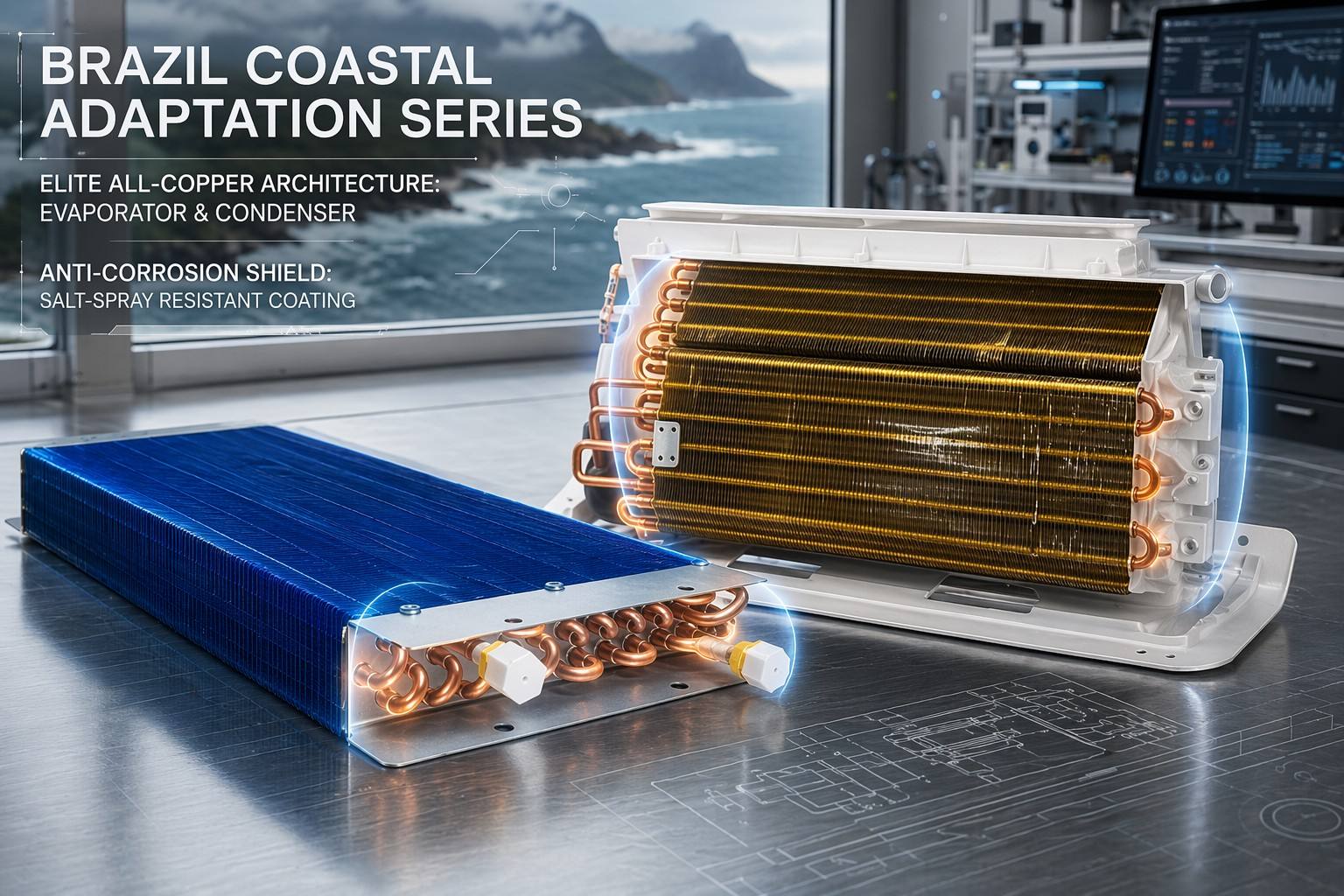
Condenser Material:
●100% High-Grade Copper Tubes.
Fin Treatment:
●Blue Diamond or Gold Fin anti-corrosive coating to prevent oxidation.
Voltage:
●24V DC for heavy-duty trucks; 12V for vans and light commercial vehicles.
Cooling Capacity:
●9000 BTU, ensuring the cabine gelada effect even in 40°C coastal heat.
Real-World Benefits: Lower Total Cost of Ownership
While a copper-based unit might have a slightly higher upfront cost, the long-term savings are undeniable:
Reduced Repairs:
1. Eliminate the frequent need for condenser replacements and refrigerant recharges.
Maintained Efficiency:
2. Corroded aluminum fins lose their ability to dissipate heat, forcing the compressor to work harder and consume more battery power. Copper maintains its thermal conductivity much longer.
Economia de Diesel:
3. By keeping the AC in peak condition, drivers can continue to rely on the electric system rather than being forced to idle the engine when the AC fails.
Why DEFU is the Partner of Choice for Brazilian Importers
Brazilian importers need a supplier who listens. We don't just sell boxes; we provide solutions. Whether your fleet is based in the Port of Santos or traversing the dusty roads of the Mato Grosso, DEFU tailors the internal components—like the condensador de cobre—to meet your specific environmental challenges.
Conclusion
Don't let the salt air eat your profits. If your trucks are running the coastal routes of Brazil, insisting on copper condensers is a strategic business decision.
Protect Your Investment with DEFU
DEFU provides high-durability truck AC systems designed for the toughest environments in South America.
Quer saber mais sobre nossos condensadores de cobre? Fale conosco:
WhatsApp: +86 13853486733
Atendimento especializado para importadores brasileiros.